A Wall Street tech rout triggered by the Democrats' sweep of Congress spread through Asia and into Europe on Friday, as investors bet the new majority will slow the data center build-out powering the AI boom.
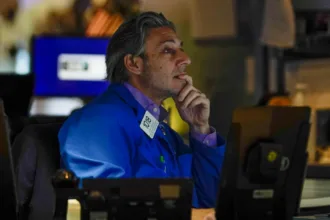
The Nasdaq dropped 5.5% on Thursday, its worst session in 19 months. The slide erased an estimated $2.5 trillion in market value and pushed the index into correction territory, at least 10% below its recent high.
The so-called magnificent seven tech companies, including Apple, Nvidia and Tesla, lost a combined trillion dollars in a single day. Nvidia fell more than 9%, memory maker SanDisk sank 22% and hard drive maker Western Digital lost 17%.
Wall Street's volatility gauge, the Vix, jumped 61% to its highest level since the early weeks of the Iran war.
Asia and Europe follow
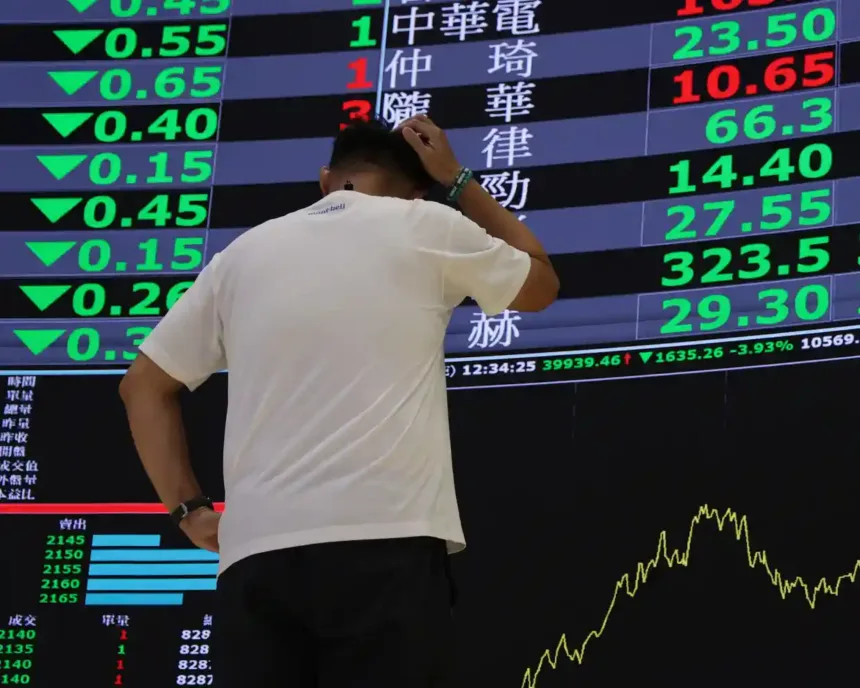
Japan's Nikkei closed 6% lower on Friday, with memory chip makers Kioxia and Tokyo Electron among the heavy losers. South Korea's Kospi plunged more than 8% at one point, tripping a circuit breaker that briefly halted trading, before closing down 6% as chipmaker SK Hynix fell more than 10%.
European losses were milder because those indexes hold fewer tech stocks. London's FTSE 100 was down 207 points, or 1.9%, at 10,575 in mid-morning trading, on track for its worst day since March. Germany's Dax fell 1.9% in morning trading and was later down 2.4%, while France's Cac 40 slipped 1.5% and Spain's Ibex lost 1.1%.
The selling reached commodities. Copper on the London Metal Exchange was headed for a 2.79% drop this week, its steepest weekly fall since March, and Craig Lang, a principal analyst at the consultancy CRU, said the metal's price is increasingly tied to sentiment about data center expansion.
Why investors are selling
Democratic candidates ran on slowing the growth of data centers and AI, and dozens of ballot measures across the country targeted the hubs. The party won both the Senate and the House, giving it control of Congress for the rest of President Donald Trump's term.
Dan Coatsworth, head of markets at AJ Bell, said investors were already uneasy about AI spending with no clear payback, and that Democrats could now slow data center rollouts and seek new ways to regulate the sector. Susannah Streeter of Wealth Club said a slower build-out threatens the spending spree underpinning the boom.
The AI story has all been about speed, and now there is a danger of it moving to a lower gear, and some of the wheels falling off.
Dan Coatsworth, head of markets at AJ Bell
Sen. Bernie Sanders added to those worries Thursday, calling on X for a national moratorium on data centers.
Trump blamed his opponents for the slide in social media posts, using a derisive nickname for Democrats. On Friday he restated his support for the AI industry, saying only foolish leadership would reject the riches it brings.
Elon Musk's companies took a heavy hit, with SpaceX down 8% and Tesla down nearly 11%, wiping more than $300 billion off their combined value. Musk had spent nearly $450 million backing Republican campaigns, including at least $45 million supporting Ken Paxton for a Texas Senate seat in a state that swung to Democrats on Tuesday.
Not everyone sees an unwind
Mohit Kumar, an economist at Jefferies, said he did not expect a quick rebound but did not view the sell-off as the start of an unwind of the AI trade. He argued Democrats would be reluctant to let data center jobs move to other states or overseas.
AI investment has been a key driver of US growth and we do not see the Democrats as giving up on this growth engine.
Mohit Kumar, economist at Jefferies
Chris Beauchamp, chief market analyst at IG, warned that more selling could follow while AI fears persist, adding that investors are also watching for a possible resumption of the Iran conflict and for swings in oil prices.
Most major indexes remain higher for the year. The Nasdaq is still up about 4.6% since January, and the FTSE 100 has gained almost 6.9% in 2026, though it now sits more than 300 points below its July record.
Some tech leaders said the backlash caught them off guard. OpenAI president Greg Brockman said everyone had been surprised by the reaction to data centers and that the company has learned it must work directly with communities in places such as Texas and Georgia, not just promote projects from San Francisco.