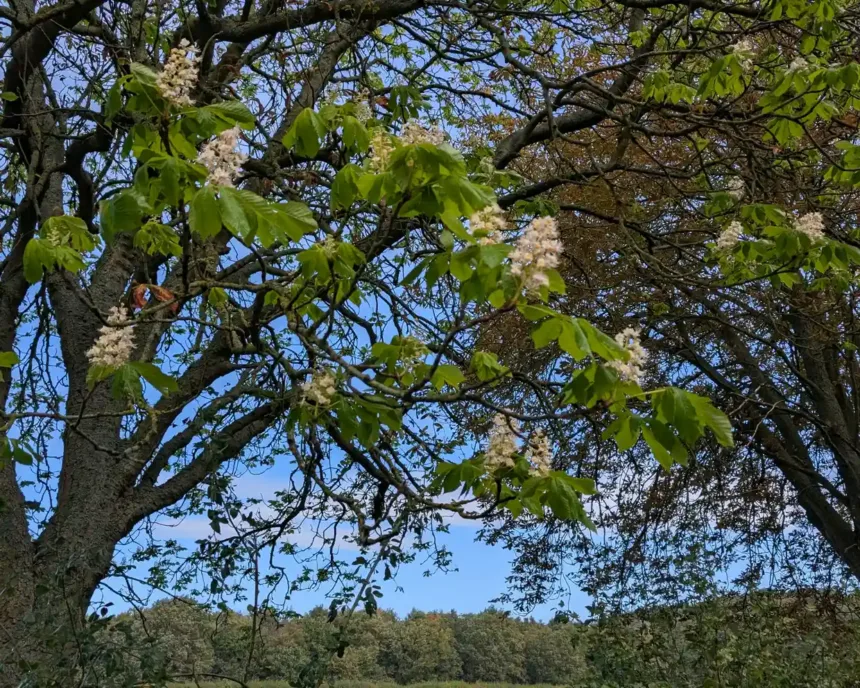
Horse chestnut trees in the UK are blooming and pushing out next year's spring growth more than six months ahead of schedule, the Woodland Trust says, after an unusually mild autumn that experts fear could do lasting damage to pollinators.
October ran warmer than average in every part of the UK, making it the ninth straight month of above-average mean temperatures. Scientists say such warmth is possible only because of the climate crisis, which is driven mainly by burning fossil fuels.
Chris Nichols, who leads conservation outcomes at the Woodland Trust, described the problem as an ecological mismatch. Trees must flower when the insects they depend on are active, he said, and falling out of step with those species threatens how well trees hold up over the long run.
Trees need to flower at a certain time of year so they’re in sync with the insects.
Chris Nichols, head of conservation outcomes at the Woodland Trust
Drought stress behind the shift
Kate Lewthwaite, who manages citizen science at the Woodland Trust, said out-of-season flowering is a symptom of stress. She suspects this year's drought caused trees to switch off essential functions, much as they do in winter, and that the return of rain then coaxed them into blooming.
That response carries real risks. A tree caught out this way could die outright, or it may have to send up new shoots in spring from dormant buds along its trunk and limbs, leaving it with a thinner canopy next year.
Kew Gardens is seeing the same pattern in its own collection, according to Kevin Martin, who oversees its trees. He said the trees went dormant during the summer and are now being drawn back into growth by the warm weather, which means the buds they would normally open in spring will already be spent. The full effect will not be clear until spring 2028, he said.
The trees are all a bit confused because they’ve been so stressed this summer
Kevin Martin, head of tree collections at Kew Gardens
A punishing year for trees
The autumn confusion follows a summer in which extreme heat triggered an early autumn of its own, with many trees wilting and dropping leaves well before their time. Experts said England's ancient oaks were dying from the heat and drought, as trees and wider ecosystems fail to adjust quickly enough to a changing climate.
Weakened trees have also proved more vulnerable to wind. Experts had warned earlier this summer that high winds, possibly linked to El Niño, could kill trees across many species. Martin said Storm Austen and Storm Boelo brought more tree failures than those wind speeds would normally cause.
Growth this year has been minimal, Martin said, particularly in the south-east, where the drought hit hardest, and he expects more storm-related failures to come. Lewthwaite urged steps to make woodland more resilient, including rewetting woods and slowing the runoff from the rain that does fall.