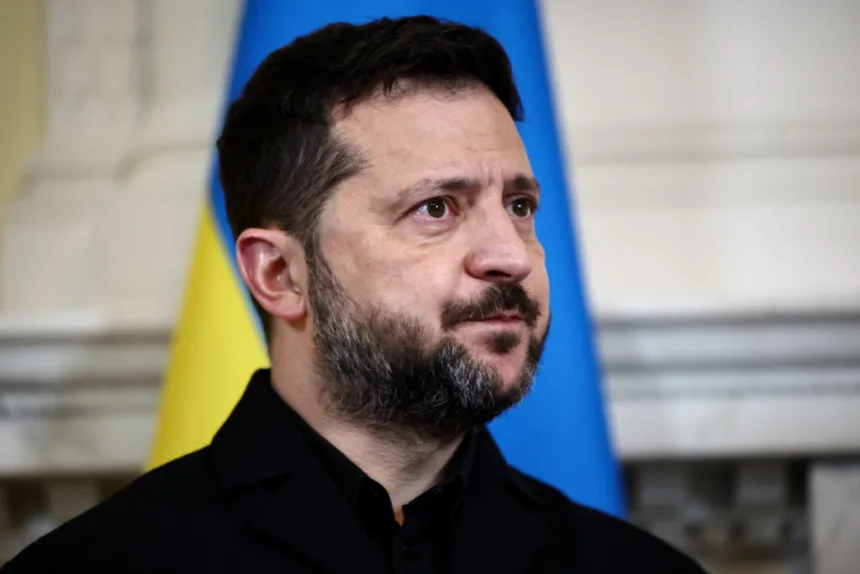
Ukrainian President Volodymyr Zelenskyy is pressing Western allies to commit in writing to exactly how they would respond if Russia attacks again after the war ends, arguing that a clear mechanism matters more than a long list of promises.
His remarks, broadcast late Thursday, came after two days of meetings in Brussels on postwar security, reconstruction and funding for 2027. Lead negotiator Rustem Umerov said the talks included officials from the U.S., U.K., France, Germany and the European Union, plus representatives of the World Bank and the investment group BlackRock.
The next step is three-way talks among Ukraine, Russia and the United States planned for next week in Abu Dhabi. They would be the first trilateral peace discussions since February in a war now nearly five years old.
Zelenskyy said he wants tangible results: an understanding of who would act, with what means, and when, if fighting resumes.
The question isn't dozens of points, but simply an understanding of the outcome: If Russia starts (attacking) again, what will happen?
Volodymyr Zelenskyy, Ukrainian president
He also said keeping bipartisan U.S. support remains important, but that Democrats' sweeping midterm victories this week could improve Ukraine's odds of getting more American help, including faster delivery of Patriot missile interceptors that Kyiv calls vital against Russian airstrikes.
Mixed signals on a deal
President Donald Trump met Thursday with Moscow envoy Kirill Dmitriev and declined to describe their discussion. He predicted a big agreement that would involve more than Ukraine and might include all of Europe.
Jared Kushner, Trump's son-in-law and envoy, said the Brussels talks aimed to build practical arrangements addressing every side's security concerns and lowering the risk of future conflict. European Commission spokesperson Paula Pinho played down hopes for a quick deal, saying much work remains and that little movement has come from Russia.
Kremlin spokesman Dmitry Peskov said there were no details to discuss and that Russia had received no ideas from Europe on security guarantees. He said any Russia-Ukraine security talks would eventually be impossible without Europe, while accusing European leaders of indecision.
Strikes continue
Meanwhile, the death toll from Monday's Russian guided bomb strike on a former school used as an aid distribution center in Komyshuvakha, in southeast Ukraine, rose to 53, according to regional acting military chief Mykhailo Semikin. Ten bombs hit the site, and several dozen people are still believed missing.
Overnight Russian strikes on energy infrastructure knocked out power in seven regions, the Energy Ministry said, with the Kyiv region hit hardest. Zelenskyy said outages and resulting water cuts posed very serious challenges for the capital.
Ukraine's air force said Russia launched 227 attack drones, 196 of which were shot down or suppressed. In Bulgaria, the Defense Ministry said authorities destroyed a Russian Gerbera-2 drone, carrying no explosives, found off the northern Black Sea coast.