Israel's chief election official declared Sunday that the outcome of the Oct. 27 general election will hold even if foreign interference allegations prove true, a blow to Prime Minister Benjamin Netanyahu's Likud party, which claims without evidence that Arab-led parties stole the vote with Qatari money.
Supreme Court Justice Noam Sohlberg, who leads the Central Elections Committee, made the statement in a video while seated between the attorney general and the head of the Shin Bet internal security agency. The Shin Bet opened its inquiry into possible foreign meddling at the commission's request.
Our position is that even if the suspicions are substantiated, this would not undermine the integrity of the electoral process or the election results as a whole
Noam Sohlberg, head of Israel's Central Elections Committee
Likud quickly pushed back, asking how the committee's chief could concede that serious allegations exist yet insist they will not change the final result.
A parliament without a majority
The dispute matters because no one won outright. Netanyahu's allied parties took 53 of the Knesset's 120 seats, a sharp fall from the 68 they held at their height in the previous parliament.
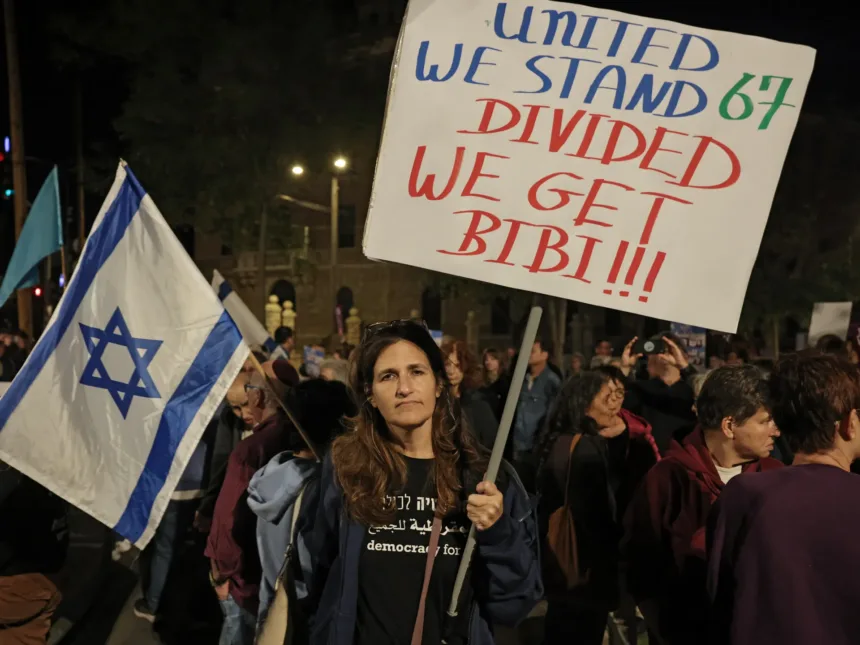
Gadi Eisenkot's opposition bloc won 48 seats, and three Arab-led parties captured a record 19. Combined, the anti-Netanyahu camp would command 67 seats, though Eisenkot has previously ruled out governing with Arab parties and it is unclear whether such a coalition will form.
Netanyahu's challenge to the vote appears aimed at heading off that alliance; he has suggested it would be treason for Eisenkot to partner with Arab parties. Eisenkot, who said the Shin Bet briefed him on its investigation, accused Netanyahu on Sunday of running a coordinated effort to undermine the results by hinting that Qatar backed the opposition. Qatar has denied funding any attempt to sway the election and called the accusations disinformation.
Bribery arrests and Arab parties
Likud has pointed to a few specific cases, including three political activists arrested before voting began who police said carried cash in envelopes, allegedly to buy votes. Four more suspects were detained two days later. Police linked them to the Islamist Ra'am party, which denies involvement.
On Sunday, a judge questioned or turned down police requests to keep restrictions on the first three. One was freed under unspecified conditions, a second was placed under house arrest for eight days, and the third had his detention extended by two days.
Ra'am leader Mansour Abbas, whose party won eight seats, condemned the arrests as undemocratic and an effort to tilt the election outcome.
Yousef Jabareen, who heads the Joint List, which took 11 seats, said last week that more than half of what Likud and Netanyahu posted on election day targeted Arab voters to energize the right. Arab citizens make up 20% of Israel's population. Outside Eisenkot's home Sunday night, a few dozen people protested against any deal with Arab parties, while larger rallies in recent days have called for a Jewish-Arab coalition.
In moments of crisis, he reverts to his familiar tactic: racist incitement and the delegitimization of the Arab public,
Yousef Jabareen, leader of the Joint List
What happens next
Certification of the results is expected this week. President Isaac Herzog begins consultations with each elected party on Wednesday and will then choose the candidate, most likely Netanyahu or Eisenkot, with the best chance of building a government. If weeks of talks fail and no alternative succeeds, Israel would face another election early next year.