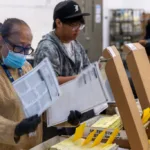
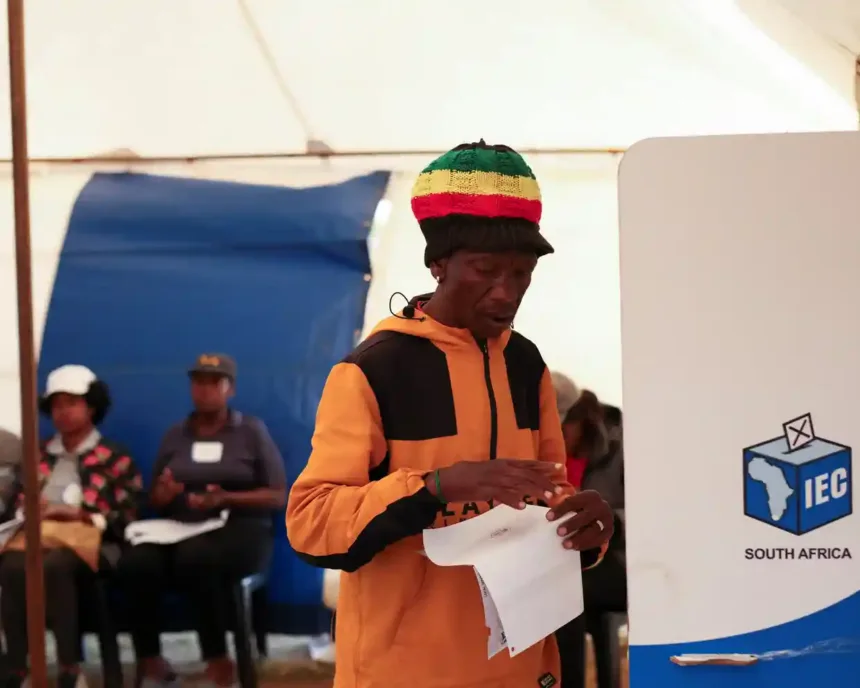
South Africans voted in local elections on Wednesday, and polls showed the African National Congress winning less than a third of the vote, a steep fall driven by public anger over water outages, power cuts and decaying infrastructure.
That would mark a sharp slide from the 45.6% the ANC took in the 2021 municipal elections and the 40.2% it won in the 2024 national vote. The party that brought Nelson Mandela to power in 1994 is still expected to finish first.
Because the vote is so fragmented, the ANC could end up leading many city coalitions even as it loses control of others.
Johannesburg, home to 4.8 million people, has gone without reliable water for more than a week. ANC mayor Dada Morero runs the city in coalition with the far-left Economic Freedom Fighters and the right-wing populist Patriotic Alliance.
In the suburb of Kensington, hit by repeated water and power failures in recent weeks, Tshepiso Makotse, a 26-year-old call center worker, said she split her two ballots, backing a Democratic Alliance councillor and giving her party vote to Jacob Zuma's uMkhonto weSizwe, or MK. Terrence Pieters, a 72-year-old retired boilermaker, said he backed an offshoot of the Democratic Alliance but expected no party to win outright.
The infrastructure in Johannesburg is shot.
Terrence Pieters, retired boilermaker
Coalitions and revolving mayors
Unstable coalitions already govern many of South Africa's 257 municipalities, and analysts cite their frequent collapse as a major cause of poor services. Johannesburg has had 10 mayors in as many years, neighboring Ekurhuleni has had three since 2021, and the Tshwane mayoralty has changed parties four times since 2020.
The consequences have been tangible. In October, more than 800 people in Bronkhorstspruit, in east Tshwane, fell ill with a gastrointestinal illness traced to contaminated water.
Water, electricity – everything, basically.
Tshepiso Makotse, call center worker
The fight for Johannesburg
In Johannesburg, Democratic Alliance candidate Helen Zille, 75, drew attention with stunts such as snorkeling in a pothole and kayaking down a flooded street. Many voters, especially black voters, remain wary of the former Cape Town mayor over past comments that appeared to excuse colonialism, and some point to soaring housing costs in DA-run Cape Town.
Herman Mashaba, a former Democratic Alliance mayor of Johannesburg who now leads ActionSA, polling around 10%, has ruled out working with Zille and has called her racist, a charge she has always denied. The ANC, divided by factional infighting, has three possible mayoral candidates for the city.
Zuma's MK and Cape Town
In eThekwini, the metro that includes Durban, MK was polling above 40%. Zuma, 84, who has denied numerous corruption allegations, is drawing support from his former party, which won 42% there in 2021 and is now polling around 10%.
The Democratic Alliance looks likely to keep its majority in Cape Town, though probably with less than the 58% it won in 2021, as unaffordable housing turns voters against it.
The electoral commission has a week to announce final results. Mayors are not elected directly, and parties will then have two weeks to form councils and choose them.