
Meta, Google and TikTok are asking federal judges to halt a California law that would bar social media platforms from offering addictive design features to users younger than 16, before the rules kick in on Jan. 1.
Each company filed its own lawsuit Wednesday, in coordination with the others, in a different federal court. Alphabet, Google's parent, went to court in San Jose. TikTok brought its case in Los Angeles, and Meta sued in San Francisco.
Assembly Bill 1709, which Gov. Gavin Newsom signed in September, targets features the law calls psychologically exploitative, including infinite scroll, autoplay and recommendations. Those design choices are blamed in part for a mental health crisis among teenagers that the measure aims to ease.
The companies argue the law violates the First Amendment. Meta's complaint says it would turn the state into the arbiter of what speech appears online. Google contends it would undercut YouTube's efforts to give users under 16 a safe and enriching experience.
The firms also say the law ignores Section 230 of the Communications Decency Act, the federal provision that protects platforms from liability for user content, and that it lets the state make choices that should belong to parents. Critics of Section 230 have long argued it helps big tech companies dodge accountability for harms.
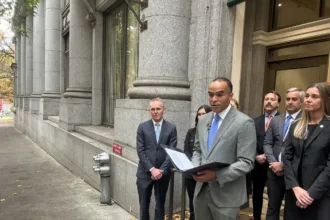
Attorney General Rob Bonta said he is committed to defending the state's laws protecting children online. Google spokesperson José Castañeda said parents are best positioned to decide what is right for their families. TikTok did not immediately respond to a request for comment.
Overly broad laws like this actually break the systems we’ve built to help kids find high-quality, age-appropriate videos.
José Castañeda, Google spokesperson
Resistance to the measure predates the lawsuits. While lawmakers debated it, the Electronic Frontier Foundation warned that its reach was so broad it would effectively ban teenagers from social media and cut them off from valuable online resources. NetChoice, an industry-aligned group, backed the suits, arguing the state cannot limit minors' access to protected expression simply because it considers that expression harmful.
The Electronic Privacy Information Center, which supports the law, countered that courts have already been rejecting industry arguments that the First Amendment protects platforms from accountability.
The legal fight follows a costly stretch for the industry. In August, Meta agreed to pay as much as $17 billion to settle claims from 47 states that it had engineered its products to be addictive to children.