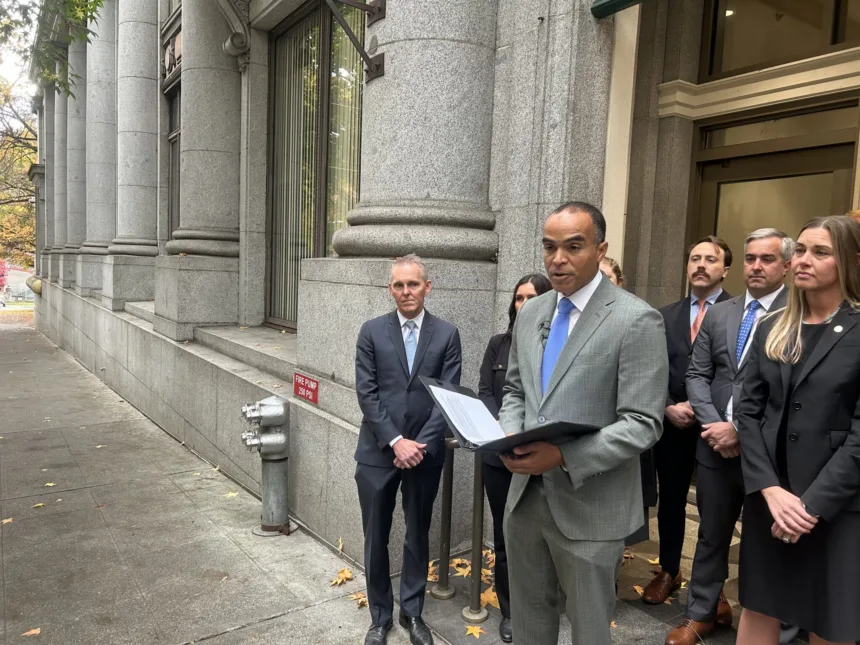
Albertsons must pay Washington $900 million over its pharmacies' role in the opioid epidemic, a King County Superior Court judge ruled Thursday, handing the state what its attorney general called a record win.
Attorney General Nick Brown said the award from Judge Janet Helson, issued after a nine-week trial in Seattle, is believed to be the largest verdict in state history. The money will not arrive quickly, because Albertsons can appeal.
The company said in a statement that it was disappointed and disagrees with the court's conclusions, adding that it is studying the decision and considering every option, including an appeal. At trial, its lawyers blamed doctors who prescribed the drugs aggressively to treat pain.
What the state alleged
Washington's case rested on sheer volume. The state alleged that the grocer, parent company of the Safeway and Haggen chains and operator of over 200 pharmacy locations statewide, dispensed 641 million opioid pills from 2006 through 2022, often ignoring warning signs that demanded a closer look.
By the state's count, prescriptions were filled more than 6.5 million times without any showing that pharmacists had confirmed a legitimate medical purpose. Pharmacists are legally required to catch diversion and flag suspicious orders to federal drug regulators, yet Brown said company policies actively discouraged that diligence.
Prosecutors pointed to individual cases. One Kent customer walked away with more than 5,000 opioid pills in a single month, and at one store a lone family medicine doctor accounted for 60% of all oxycodone dispensed, a state attorney told the court. In some instances, Albertsons did not let pharmacists turn away prescriptions from pill mill doctors.
Workers also stole drugs, the state said, a problem Brown tied to sloppy inventory tracking. A Safeway employee in North Bend took more than 70,000 pills over two years, while other thefts reached 12,000 pills in Leavenworth and 19,000 in Olympia. In 2017, Safeway agreed to pay $3 million after investigators found it had waited months to alert the DEA about missing hydrocodone at the North Bend store.
Evidence at trial showed chronic understaffing left pharmacy employees too overworked to properly vet prescriptions, and one pharmacist warned the company that the conditions could put lives at risk, according to the attorney general's office. Brown argued the pattern showed Albertsons valued profit over patient safety.
Going it alone
Albertsons agreed in April to pay $774 million to resolve a batch of other lawsuits around the country, but Washington declined a share. Brown said the state wanted a higher level of accountability and called the verdict proof that the strategy worked.
We thought the liability and the accountability that we needed to achieve against Albertsons was greater than the efforts that we were seeing elsewhere
Nick Brown, Washington attorney general
The lawsuit began under Bob Ferguson, now governor, who as attorney general also sued other major grocery chains; Kroger agreed in 2024 to pay Washington $47.5 million. Ferguson said in a social media post Thursday that pursuing the companies behind the crisis had been a top priority.
Washington has now secured nearly $2.2 billion for state and local governments from opioid manufacturers and distributors. The funds pay for efforts to prevent drug abuse and overdoses, with past settlement money held in the state treasury for distribution to cities and counties.