
A federal judge has ruled that the U.S. Army Corps of Engineers broke two federal environmental laws when it approved a 2024 permit for a company to dredge for gold in a channel east of Nome, Alaska, though the permit remains in place for now.
In a Nov. 2 decision, U.S. District Judge Sharon Gleason found the Corps violated the National Environmental Policy Act and the Clean Water Act in issuing the Clean Water Act permit to IPOP LLC. She declined to vacate it, instead allowing both sides 21 days to file additional material she will weigh before deciding what happens to the permit.
Five tribal governments brought the case in 2025, arguing that the Corps wrongly reversed its own 2022 denial of the permit on environmental grounds.
The judge's central finding concerned a split inside the agency. The Corps' Alaska district office rejected IPOP's application in 2022; two years later, the Hawaii-based Pacific Division approved it without adequately explaining why it reached the opposite result, Gleason wrote.
She cited disagreements over effects on migratory birds, the channel's floor and turbidity in the water, and noted that the Pacific Division relied on a study the Alaska district had discredited.
failed to explain its rationale for reaching a different conclusion from the District; indeed, it did not even acknowledge the District’s different conclusions.
Sharon Gleason, U.S. District Judge
The Corps countered in a July 2025 court filing that the tribes used vague and ambiguous language to define key terms, including their description of the area as a pristine estuary and a haven for subsistence users.
A long fight over Bonanza Channel
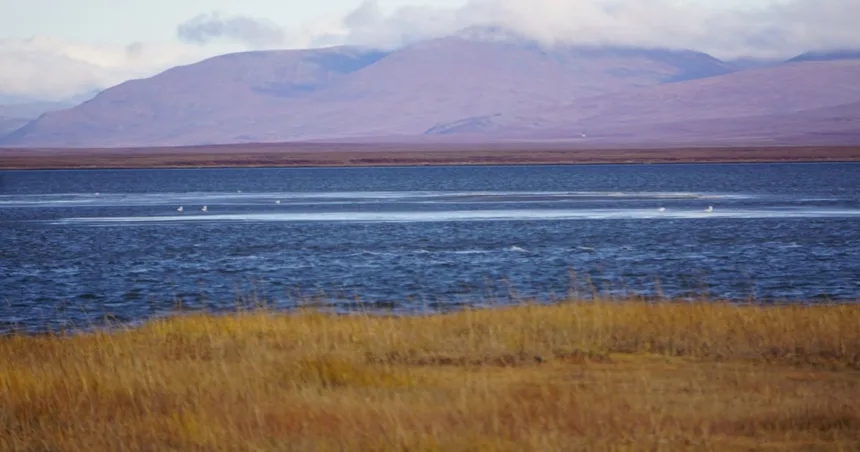
Las Vegas-based IPOP wants to dredge nearly 3 miles of Bonanza Channel, an ecologically important part of Safety Sound, which drains into Norton Sound. The gold mining venture was first promoted as the premise for a reality TV series called Rivers of Gold, an element the company has since said it abandoned.
Opposition in Nome and the Bering Strait region has been broad. Besides the tribal plaintiffs, the regional tribal consortium Kawerak Inc., the Bering Straits Native Corp. and the Norton Sound Economic Development Corp. have weighed in against the plan.
The plaintiffs are the Village of Solomon, the Native Village of White Mountain, the Chinik Eskimo Community, the Village of Council and the King Island Native Community. Solomon has the closest geographic ties to the channel, and the tribes welcomed the ruling as protecting land vital to their food security and cultures.
Deilah Johnson, Solomon's treasurer and tribal resources director, said nobody lives there year-round, but tribal members return seasonally to fish, pick berries and hold youth and elder camps. Residents were forced out in the 1950s after the Bureau of Indian Affairs shut the school, she said, which makes the place especially meaningful.
State permit also denied
Even with its federal permit, IPOP cannot begin development work because it lacks a land-use permit from the Alaska Department of Natural Resources. The department's Division of Mining, Land and Water turned down the application last year and rejected IPOP's appeal in March.
That 34-page decision, signed by Commissioner John Crowther, called the proposal flawed and incomplete, saying the company had not shown that surface use of state land was needed to dredge up to 900,000 cubic yards a year. Without exploration data, the department said, the project would cause unnecessary and undue degradation under state law.
Johnson said she expects IPOP to keep pursuing permits and that opponents, who have fought the project for years, will continue to resist it.