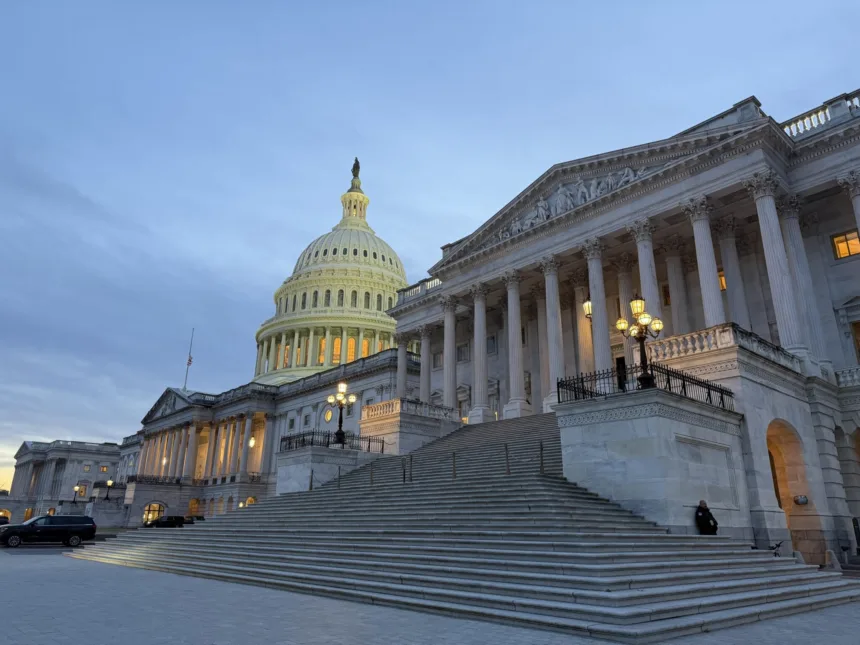
Republicans still controlling both chambers of Congress have until Dec. 11 to pass a spending bill and avoid a government shutdown. That is the most urgent job of a five-week lame-duck session that opens Monday, before Democrats take power in January after winning the midterms.
Federal programs have run on temporary funding since the fiscal year started Oct. 1. With too little time to negotiate the dozen full-year appropriations bills, expected to cost roughly $1.9 trillion, lawmakers will need another short-term patch that carries funding into next year, when Democrats will lead budget talks with President Donald Trump.
GOP leaders also hope to send Trump several major measures: the annual defense policy bill, a farm bill, legislation governing college sports and a permitting overhaul meant to ease rules on large construction projects.
Senate Republicans plan to spend their remaining weeks confirming nominees before leaving in mid-December, since a Democratic majority is unlikely to move Trump's picks. A Senate GOP aide said judicial nominees will be a top priority.
One Republican stands in the way. Sen. Kevin Cramer of North Dakota is still holding up all of Trump's nominees to press the administration to scrap a Biden-era Fish and Wildlife Service rule on wetland easements that he says hurts property owners in his state.
Cramer has eased his blockade step by step as he sees progress, clearing the way for Labor Secretary Keith Sonderling's confirmation and releasing his hold on Chris Klomp, nominated as deputy secretary of Health and Human Services.
Farm and defense bills
His office said he would lift a few more holds after Fish and Wildlife Service Director Brian Nesvik visited North Dakota in October.
The farm bill, a sweeping package of agriculture aid and nutrition programs, is years overdue because the parties keep clashing. Senate Agriculture Chairman John Boozman, an Arkansas Republican, said he hopes to strike a deal within weeks, though that will take Democratic votes; his committee's September version drew no bipartisan backing.
House Agriculture Chairman Glenn Thompson, a Pennsylvania Republican, called a five-year bill a top priority. Rep. Angie Craig of Minnesota, the panel's ranking Democrat, said she is in talks across both parties and chambers over food assistance, year-round sales of 15% ethanol fuel and conservation funding.
I remain deeply committed to addressing the unfunded SNAP mandate that Republicans forced onto states and counties
Rep. Angie Craig, ranking Democrat on the House Agriculture Committee
Prospects look brighter for the National Defense Authorization Act, which Congress has passed every year for more than six decades. House Armed Services Chairman Mike Rogers, an Alabama Republican, called it his highest priority and said failure would cost troops a pay raise and better health care and child care access.
House GOP leaders must decide whether to hold a vote on the college sports bill the Senate passed earlier this year. A spokesperson for the Senate Commerce Committee warned that the bill has no realistic path in 2027 and that any amendment would doom it.
A bipartisan Senate group unveiled the permitting bill in late September to speed public projects by streamlining regulatory reviews. The Senate is set to take its first procedural vote on it this week, and House leaders have not committed to taking it up.
Leadership shake-up
The House may also rewrite its rules to curb ethics violations by members in recent years, an effort Reps. Kat Cammack, a Florida Republican, and Teresa Leger Fernández, a New Mexico Democrat, have worked on for months.
Away from the floor, House Republicans will privately pick their leader for the coming minority. Speaker Mike Johnson of Louisiana said this week he will not seek the post, opening a contest between Majority Leader Steve Scalise of Louisiana and Judiciary Chairman Jim Jordan of Ohio.
The other top figures, Democrats Hakeem Jeffries and Chuck Schumer and Senate GOP chief John Thune, are expected to keep their jobs.