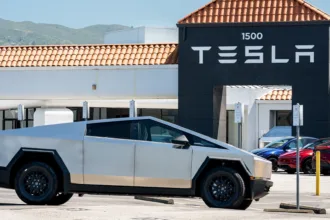
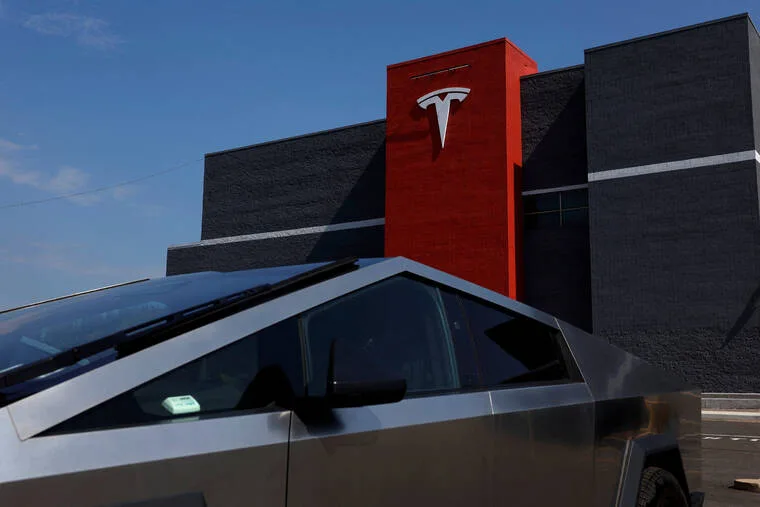
Tesla plans to stop building the Cybertruck at its Texas plant around the middle of 2027, Elon Musk said. The move retreats from one of the CEO's signature projects after years of weak demand for a pickup he once pitched as a challenger to General Motors and Ford.
In a post on X, Musk said ending production would let Tesla turn out more Cybercabs. The robotaxi is central to his autonomous-driving plans, though it has not yet shown it can succeed commercially. Replying to another user, he called the Cybertruck the best vehicle Tesla has ever built and said its retirement marked the end of an era.
The sales numbers fell far short of the early hype. Kelley Blue Book data show Tesla sold 20,237 Cybertrucks in the U.S. last year, a 48% drop from 38,965 in 2024. When production started in 2023, Musk had forecast 250,000 sales a year.
It doesn’t make sense to keep it going when it’s not meeting its targets,
Andy Palmer, former Aston Martin CEO
Tesla has not made clear whether the truck will move to another factory or disappear altogether. Its Austin plant is the only Tesla site known to have the equipment needed for the model's specialized parts.
One of the truck's largest buyers was another Musk company. SpaceX's IPO filing shows it purchased $131 million worth of Cybertrucks from Tesla in 2025, valued at list price.
The truck had a rocky start. At its 2019 unveiling, Musk tried to show off shatterproof windows, and metal balls thrown at the glass left two of them badly cracked. Since deliveries began in late 2023, Tesla has issued 11 Cybertruck recalls, according to the National Highway Traffic Safety Administration.
Its stainless-steel, sharp-edged body also kept it out of Europe, where electric vehicles sell better. Pedestrian-impact crash rules there made regulatory approval impossible. Automotive analyst Felipe Munoz noted that electric pickups from Ford and other makers have also struggled in the U.S. because American buyers have not embraced the segment.
The Cybercab is unlikely to replace the lost truck volume anytime soon. The two-seat vehicle has no steering wheel, pedals or mirrors, and production began only this year, with listed installed capacity above 125,000 units. Tesla started charging for rides in a small Austin fleet in September. Texas motor vehicle figures put Cybercabs at roughly 570 of Tesla's Texas robotaxis, a fleet topping 1,200 that consists mostly of Model Y vehicles.
Federal regulators are also examining the robotaxi. In September, NHTSA opened an audit of how Tesla self-certified that the Cybercab meets federal vehicle safety standards.
The announcement capped a difficult week for Musk. He spent nearly half a billion dollars on Tuesday's midterm elections, a record sum, and most of the Republicans he supported lost. His companies were also on pace to shed more than $180 billion in combined market value over the week.