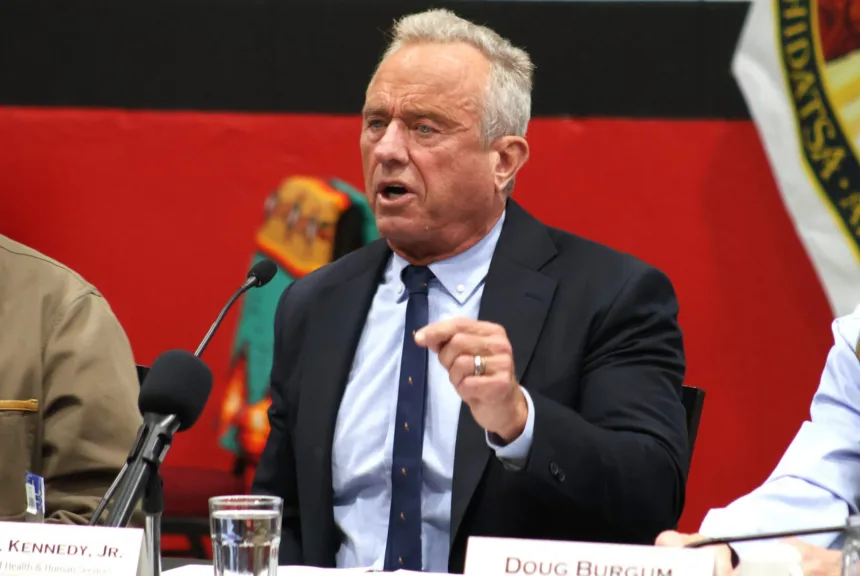
Health and Human Services Secretary Robert F. Kennedy Jr. told North Dakota tribal leaders Thursday that the Indian Health Service must be overhauled. The tribal leaders pressed Washington to fund their own health solutions rather than impose federal ones.
The roundtable took place Nov. 5 at United Tribes Technical College. Kennedy said tribes handle their own affairs better than the federal government does. He said giving them more control would let them make day-to-day decisions for their communities.
Money was the sharpest point of tension. Lonna Street, who chairs the Spirit Lake Nation, said the Indian Health Service budget sits at $8 billion while estimated need tops $50 billion a year. She also cited staffing shortages at existing clinics and a lack of housing for the medical workers tribes recruit.
We are not simply asking for the healthcare funding. We are advocating for the health and the dignity and the safety of the future of our Native nations.
Lonna Street, chair of the Spirit Lake Nation
Garret Renville, leader of the Sisseton-Wahpeton Oyate, said chronic disease in tribal communities is moving in the wrong direction. He asked whether federal officials were willing to turn the agency from a provider of care into an institution that helps tribes build and govern their own health systems.
Kennedy arrived with Interior Secretary Doug Burgum, Sens. John Hoeven and Kevin Cramer, and Rep. Julie Fedorchak, North Dakota's only House member. He described the group as there to listen and pledged to deliver what the tribes said they needed.
Several leaders argued that health cannot be separated from other hardships. Street pointed to unequal school funding, drug crime, unsolved cases of missing and murdered Indigenous people, and scarce jobs. Steve Sitting Bear, who leads the Standing Rock Sioux Tribe, said the tribe has launched its own efforts on housing, public safety and economic development and now wants Congress and federal department heads to match them.
Addiction came up repeatedly. Mark Fox, the departing chair of the Mandan, Hidatsa and Arikara Nation, said drugs are killing tribal members and that tribes cannot pay for treatment by themselves. He praised the nation's Good Road Recovery Center and said Kennedy's unconventional ideas are what tribes need, even though the secretary draws criticism.
Fox invoked Albert Einstein's definition of insanity to describe decades of federal programs in Indian Country that repeat the same approach without results.
Chris Parisien, a Turtle Mountain Band of Chippewa policy specialist standing in for Chair Jamie Azure, said the tribe's addiction recovery facility has shown good results in its first year or so. He added that tribal life expectancy runs 20% below that of other North Dakotans because of poor access to preventive care.
Kennedy pointed to his department's work for tribes in the nearly two years since his confirmation. He tied it to his father's belief that the country had to remedy its treatment of Native peoples, which Kennedy called genocide.