Tuesday’s midterm elections will put a record 17 women in governor’s offices next year and produced a record five Black gubernatorial winners, while also sending the first Muslim, the first openly gay elected and the first Native American woman senators to Washington.
Georgia’s Keisha Lance Bottoms became the first Black woman elected governor in the country. She will also be the state’s first Democratic governor since 1998.
The barrier-breaking wins came as Democrats flipped both the House and Senate. Democrats will hold 28 governorships to 20 for Republicans, with two contests still undecided.
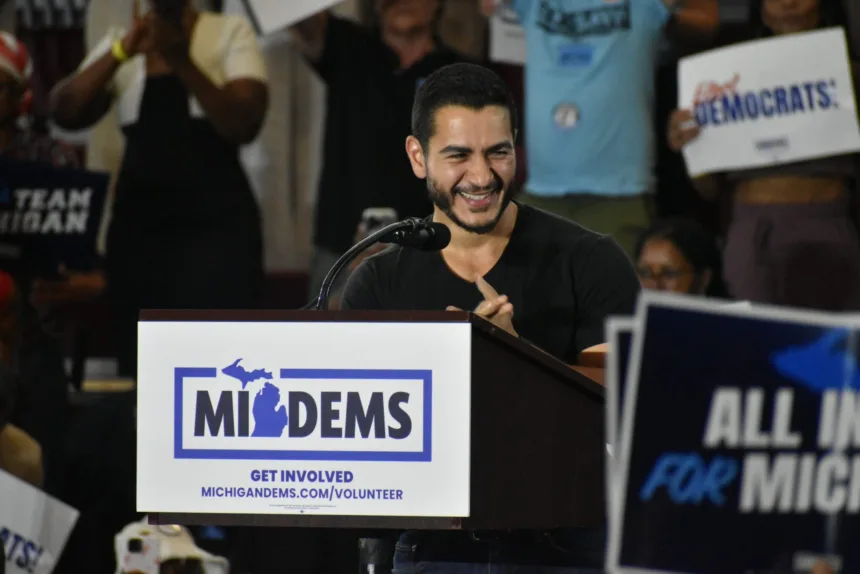
Three Democratic senators-elect will make history when the 120th Congress is sworn in this January: Rep. Chris Pappas of New Hampshire, the first openly gay elected senator; Abdul El-Sayed of Michigan, the first Muslim senator; and Minnesota Lt. Gov. Peggy Flanagan, the first Native American woman senator.
Two undecided contests could extend that list. Alaska Democrat Mary Peltola, an Alaska Native, was locked in a Senate race too close to call Wednesday, and in the Mississippi Senate race, Democrat Scott Colom could become the state’s first Black senator since Reconstruction if he unseats Republican Sen. Cindy Hyde-Smith.
A new map of governors
In New Mexico, Democrat Deb Haaland became the first Indigenous woman elected governor anywhere in the U.S. A member of the Pueblo of Laguna, she was the first Native American to serve as a Cabinet secretary in 2021.
Minnesota elected its first woman governor, Democratic Sen. Amy Klobuchar. Texas Democrats swept the state, and Gina Hinojosa became its first Latina governor by defeating Republican Gov. Greg Abbott, who had sought a fourth term. Ohio chose former state health director Amy Acton, its first woman and first Jewish governor, over Republican Vivek Ramaswamy, who had defended a campaign ad featuring Acton’s estranged mother.
Wisconsin and Nevada each elected a Black governor for the first time: David Crowley, a former county executive running as a centrist Democrat, and Attorney General Aaron Ford, who ousted Republican Gov. Joe Lombardo. In Florida, Republican Rep. Byron Donalds will be the nation’s first elected Black Republican governor, and Maryland Gov. Wes Moore cruised to reelection.
Growing caucuses
Caucuses aligned with Democrats will also expand. The Congressional Hispanic Caucus will top 50 members, up from 44, with six newcomers who flipped Republican seats in Arizona, California, Colorado, Nevada and Texas.
Rep. Grace Meng, who chairs the Congressional Asian Pacific American Caucus, said the group will add at least four members to reach a record 22. An uncalled Arizona House race would make it 23 if Democrat Amish Shah wins.
Last night’s election was a resounding repudiation of President Trump and his failed policies that put the safety, security, and civil rights of Asian Americans, Native Hawaiians, and Pacific Islanders at risk
Rep. Grace Meng, chair of the Congressional Asian Pacific American Caucus
Michigan, which elected El-Sayed, was one of five states where Democrats gained full control of state government. Governor-elect Jocelyn Benson heads the state’s first all-female ticket, and Democrats will have more than a one-vote majority in the Legislature.