
Some British employers are hiring recent graduates into jobs built around running AI tools rather than learning a traditional craft. Supporters say the roles can speed up careers, while some executives warn that AI skills alone will not carry a young professional far.
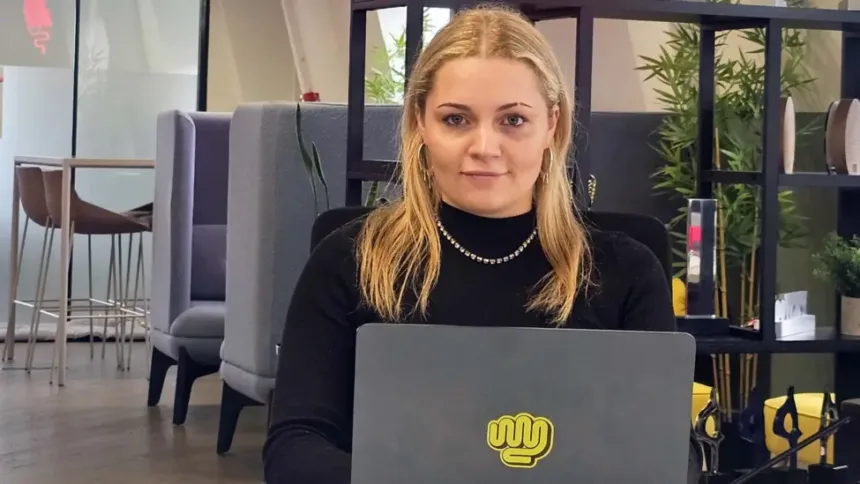
Lotte Underwood, 25, joined the London public relations agency Fight or Flight last November in a newly created "AI associate" role, after earning a degree and a master's in marketing. She now spends more time using AI than doing PR work. Her dedicated AI team has built around 30 AI agents.
Those agents handle industry research, client reporting, media interview preparation, clearer client briefs and image generation. Underwood manages them, checks what they produce and passes the results to colleagues who deal directly with clients and journalists. She also tracks how clients show up in answers from tools such as ChatGPT, Claude and Gemini.
Dillan Patel, 24, a business management graduate, joined engineering software company Stride 18 months ago as an intern. His first assignment was an internal chatbot meant to capture the knowledge of a senior employee heading into retirement. He is now an AI automation analyst, building agents for individual teams and identifying manual or repetitive tasks that AI could take over.
At consultancy Valliance, 23-year-old Cian Clinton uses around 10 AI agents each day. He says the technology makes him feel like an equal team member rather than a graduate, and that he is taking on responsibilities that would normally take four or five years to reach.
AI is killing the 'pyramid' approach…progression is no longer based on your knowledge bank.
Cian Clinton, Valliance employee
Research from PwC points to the same pattern. Its 2026 AI Jobs Barometer, which analyzed 2.4 million entry-level jobs in the United States, found that the entry-level roles most influenced by AI are seven times more likely to require traditionally senior skills, such as strategic decision-making and team building. Those roles have grown 35% since 2019, while other entry-level roles shrank by 10%.
AI is seen as one of the main drivers of cuts to graduate hiring. At ArvatoConnect, an outsourced contact center company, CEO Debra Maxwell says the usual graduate intake is on hold this year but should resume next year with a bigger focus on AI. She argues that larger, AI-enabled roles can produce a more loyal and engaged workforce.
Doubts about learning the trade
Not every employer is building programs around the technology. Simon Pratt, chief operating officer at Portman Finance Group, says using AI well matters, but his company's two-year graduate program centers on learning the trade. Graduates rotate through four areas at six-month intervals, working alongside senior relationship managers and eventually running transactions from start to finish.
Claire Reid, PwC UK's chief technology and innovation officer, says every graduate job will now require a baseline of AI literacy. But she warns that roles too heavy on AI will not necessarily deliver long-term career progression without knowledge of the sector and of what clients want.
The graduates themselves see the trade-off differently. Underwood says she has not yet had the chance to pitch directly to the media and plans to, though she is confident about her future on the agency's growing AI team. Patel says he has no wish to move to other roles, because his AI projects already put him in close contact with different parts of the business.