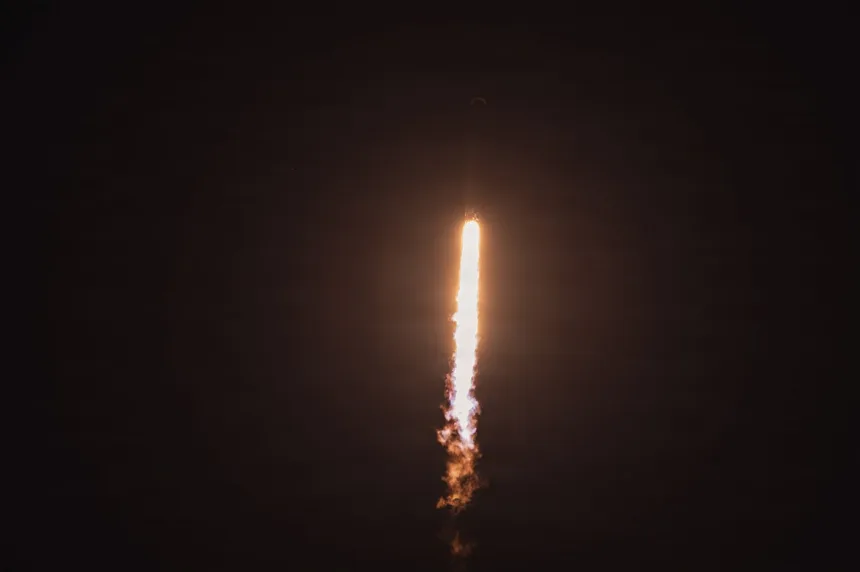
AST SpaceMobile said Nov. 6 that it is developing its own reusable rocket, called Blacklift, to carry its broadband satellites to low Earth orbit. The company is aiming for a first flight in 2028.
Blacklift is designed to lift 20 tons to low Earth orbit, enough for as many as five BlueBird satellites on each mission, the company said. By comparison, SpaceX's workhorse Falcon 9 can carry roughly 25 tons to the same orbit.
The company is not designing the propulsion from scratch. Firefly Aerospace, also based in Texas, will supply engines and engineering support for the first three Blacklift flights under a $500 million agreement.
After those three missions, AST SpaceMobile plans to manufacture the engines in-house through a licensing deal with Firefly. The company put the cost of that license at about $800 million, split evenly between cash and stock.
Two Firefly engines are involved: Miranda for the booster and Vira for the upper stage. Neither has flown, though AST SpaceMobile said Miranda has logged more than 4,200 seconds of firing across 175 ground tests.
Company President Scott Wisniewski said Miranda would let AST SpaceMobile skip the five- to 10-year development cycle that new rockets typically require. Founder and CEO Abel Avellan said Blacklift would give the company regular, unconstrained access to orbit and broaden the market it can reach.
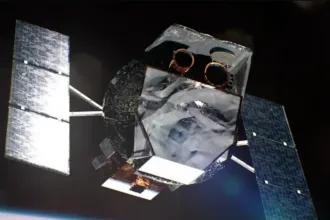
AST SpaceMobile's BlueBird satellites beam internet service straight to cellphones. Thirteen have launched so far, including eight next-generation Block 2 models whose 2,400-square-foot antennas are the largest a commercial satellite has unfurled in low Earth orbit.
Until now, the company has relied on rockets from SpaceX and Blue Origin, along with an Indian launcher. It already holds contracts with outside providers to send more than 100 more BlueBirds aloft during 2027 and 2028, while Blacklift is still in development.
The move toward building its own rocket comes as the launch market may tighten. SpaceX has said it intends to retire the Falcon 9 and Falcon Heavy once its Starship megarocket is operating, and it has signaled that Starship will put its own satellites first.
SpaceX CEO Elon Musk has suggested those payloads could include 100,000 Starlink V3 satellites and a million Starmind AI data centers, a volume that could leave other satellite operators scrambling for rides.
AST SpaceMobile is not alone in pursuing its own launcher. Ten days earlier, Cowboy Space unveiled Big Iron, a rocket meant to deploy a constellation of 20,000 AI data centers, and it is also targeting 2028 for a first launch.