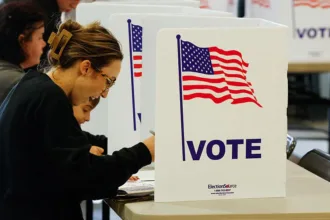
In this analysis, Tuesday's midterm vote is a referendum on how much room President Donald Trump will have for his last two years. A Republican Congress would keep his agenda moving, while a Democratic win in either chamber would likely stall it and could push him toward lame-duck status.
The numbers lean toward a split. Polls and oddsmakers favored Democrats heading into Election Day, especially in the House, where they hold 212 seats and need 218. By the Cook Political Report's ratings, Democrats can win the chamber without carrying any of 18 toss-ups; Republicans, favored in 195 seats, would have to take all 18 and flip five Democratic-leaning seats.
The Senate is tighter. Republicans enter with a bigger margin there than in the House, Cook rated six Senate contests as toss-ups, and Democrats need at least three of them. Thirty-three seats are up in regular elections, plus special elections in Florida and Ohio for the seats Marco Rubio and JD Vance gave up to join the executive branch.
In this scenario, Senate Republicans would act as a check on both the Democrats and many of Trump's populist impulses.
Stifel's Washington Policy Strategy Group
What a split Congress would mean
If Democrats take even one chamber, the most powerful tool of the current Congress goes away. Party-line budget reconciliation, the route for most big spending and policy changes under narrow margins, would no longer work, and any bill would need votes from both parties.
That shifts leverage onto must-pass measures: government funding, defense spending and an approaching debt ceiling increase. The party outside the White House typically uses those deadlines to wring concessions from the majority, which can lead to standoffs.
Democratic gavels would also bring subpoena power in committees. The party is widely expected to use it to probe the administration and the companies that have done business with it.
A sweep, or the status quo
A Democratic sweep of both chambers, which polling suggests is possible, still would not hand the party control of policy. Trump keeps his veto, the Senate's 60-vote filibuster remains, and neither party is likely to reach 60 seats. Democrats might instead pass party-line bills mainly as messaging ahead of the 2028 presidential race.
Analysts expect Trump to lean harder on executive orders under either divided or unified Democratic control. If Republicans hold both chambers, his remaining legislative program could keep advancing, with Democrats limited mostly to filibuster leverage and little room to investigate.
Investors are watching too. Stifel's Washington Policy Strategy Group predicted a Democratic House and a Senate too close to call, warning of a quick market move as the Senate picture clarifies. A surprise Republican Senate hold, the firm wrote, could spark a relief rally in sectors that would sour on a Democratic win.
However, the market's knee-jerk trade could reverse as investors recognize that gridlock remains the most likely policy outcome in either case.
Stifel's Washington Policy Strategy Group
A long count possible
Patience may be required. Counting could take days or even weeks, and a Senate majority hinging on Alaska could mean a wait. More than 57 million people voted early, and the first polls close at 6 p.m. ET in eastern Indiana and Kentucky.