Control of the House and Senate may remain unsettled after polls close Tuesday, and election experts are warning voters that slow counts in close races are routine, not evidence of fraud.
The stakes are high. Republicans entered Election Day clinging to a 218-214 House edge and facing heavy headwinds as the party in power, with competition stretching across roughly 70 districts.
David Becker, who founded and runs the Center for Election Innovation & Research, said he doubts Americans will learn on election night who controls either chamber. If they do, he said, it would mean a very large wave is underway.
Becker predicted that candidates who believe they are losing will spread falsehoods to fill the gap before results are known, and said he believes President Trump probably will too, as he did in 2020. Asked last week whether he would accept the midterm results, Trump said he would if the elections are honest.
Lawrence Norden, who oversees elections work at the Brennan Center for Justice, said misinformation thrives in the window between voting and results, and that window stretches longer when races are tight.
When it's super close, it's not going to matter how fast you are counting the ballots,
Lawrence Norden, Brennan Center for Justice
Early bellwether districts
The first national signals are likely to come from Kentucky's 6th District and Indiana's 5th, where polls close in the 6 p.m. Eastern hour. Trump carried them by 15 and 17 points in 2024, and both parties have poured money into the Kentucky contest between Democrat Zach Dembo and Republican Ralph Alvarado.
Florida, which counts and reports quickly, offers more than half a dozen competitive seats. They include the open 22nd District, where Democrat Pia Dandiya faces Republican Casey Askar, and the redrawn 25th, where Democratic Rep. Jared Moskowitz faces Republican Scott Singer.
Why some counts lag
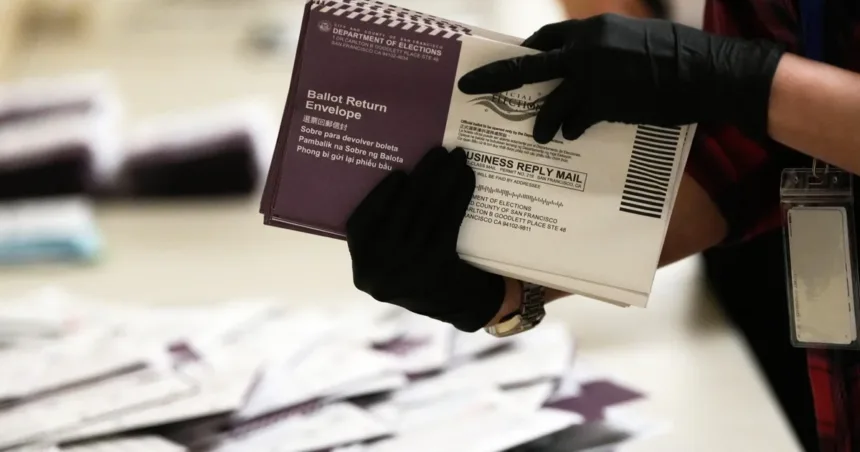
California will be slower in close contests. Mail ballots there count if postmarked by Election Day and received within a week, and each must pass signature verification, with none tallied until polls close. In Pennsylvania and Wisconsin, state law bars officials from even processing mail ballots until Election Day morning.
Because late-arriving mail ballots are among the last reported, Becker said, early Republican leads can shrink as those batches come in, an effect he called the red mirage. He said the pattern has eased since 2020 but persists in some places.
If you hear candidates complaining about the process, I don't know whether they won or lost, but I can tell you that they think they lost, because the winners do not complain about the process
David Becker, Center for Election Innovation & Research
Becker added that election officials have never finished counting on election night, and that every state takes weeks to certify its results.