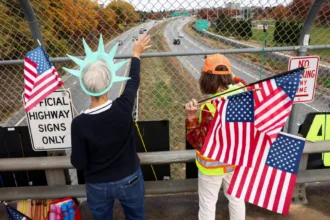
Voters cast their final ballots Tuesday to decide control of the House and Senate. Democrats are favored to win back the House, while the Senate majority is a toss-up after a midterm early vote that broke previous records.
Democrats need a net gain of just three House seats to reach 218 and a majority. Republicans tried to protect themselves with a rare mid-decade redistricting, but the landscape has moved toward Democrats, even over the past month.
Republicans hold the Senate 53-47, so Democrats need a net gain of four seats. The GOP can keep control with 50 seats because Vice President JD Vance casts tie-breaking votes.
Democrats are favored to flip North Carolina, but the other contested races are either toss-ups or lean slightly Republican. Apart from Maine, the five Republican-held toss-ups are in states Trump won by double digits in 2024.
Think of what is possible tomorrow: Democrats can flip the House, take back the Senate, and stop Trump’s harmful agenda
Ken Martin, Democratic National Committee chair
Michigan is the Republicans' top target. Democratic Rep. Haley Stevens endorsed Republican Mike Rogers on Sunday after narrowly losing her primary to progressive Abdul El-Sayed, following tensions that included his criticism of Israel. Trump praised her decision. A final poll taken before her announcement showed El-Sayed ahead of Rogers by 11 points.
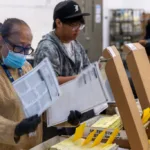
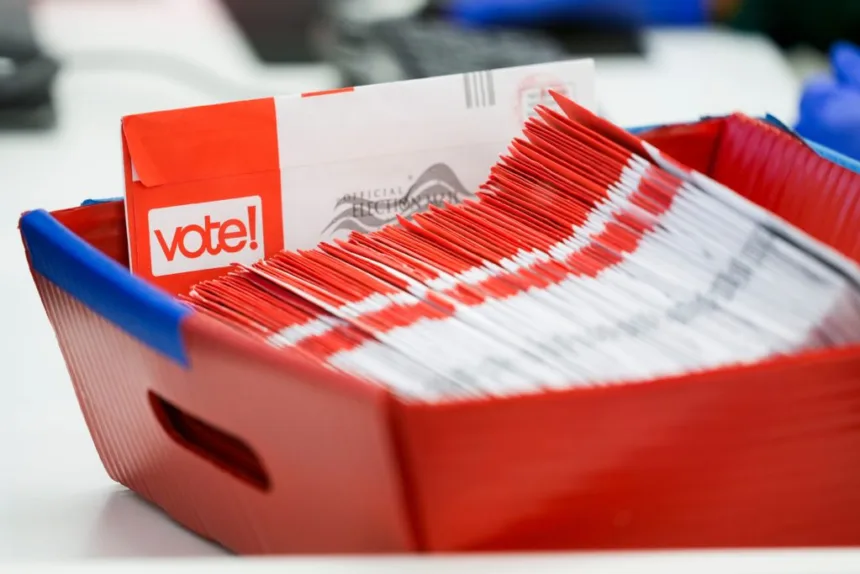
Counts of the early vote range from more than 54 million to more than 57 million ballots. The higher figure would be a midterm record and 24 percent above the 46 million early votes cast in 2022, with more people voting early in person rather than by mail.
Of early voters whose party is known, 43 percent are Democrats and 31 percent are Republicans, according to University of Florida Election Lab data; not every state reports party. That makes Republican turnout on Election Day crucial, since GOP voters overwhelmingly vote in person.
Trump's closing push
Trump has predicted Republicans will hold both chambers. He told supporters Sunday at a rally in Salina, Kansas, which he called his 30th rally of the past month, that the party would win, then delivered his closing message Monday at the Lincoln Memorial Reflecting Pool, a renovation project that has drawn attention for peeling paint and algae blooms.
We're going to win and let's make the next two years bigger and better and stronger than ever before,
President Donald Trump
Republicans face history, since the party in power has traditionally lost seats in midterms, along with persistent inflation tied partly to a war with Iran that polls show is unpopular and Trump's increasingly negative approval ratings. In Kansas, Democratic pastor Adam Hamilton is trying to unseat GOP Sen. Roger Marshall and become the state's first Democrat in nearly a century to win a Senate election.
Court fights and ballot measures
The Supreme Court on Monday declined to block California from counting 20,000 ballots the Trump administration alleges were cast by potential noncitizens. Over the weekend, a federal judge rejected an administration lawsuit seeking to block Alaska's results if Republican Sen. Dan Sullivan loses, and the Justice Department announced election-related charges against 63 people, though multiple studies and audits show voter fraud is extremely rare.
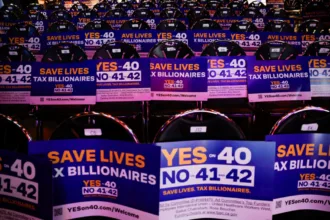
Governorships are on the ballot in 36 states, and all but four states are holding legislative elections. Voters will decide 145 statewide ballot measures, including California's Proposition 40, a one-time 5 percent tax on wealth for residents worth over $1 billion, and voter ID or noncitizen voting measures in 11 states.
The first polls close at 6 p.m. ET in parts of Kentucky and Indiana, and the last close at 1 a.m. ET in Alaska. In close races, the count could take days or even weeks.