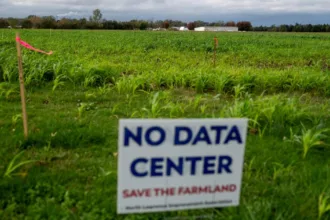
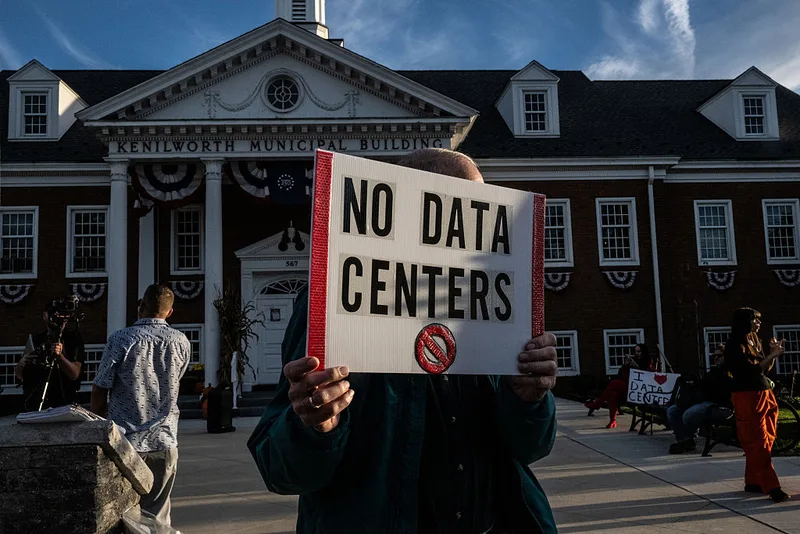
Voters in towns and cities across the country used Tuesday's midterm ballots to rein in data centers, approving nearly every local measure meant to slow or stop construction of the facilities that power artificial intelligence.
As of Friday, 44 measures restricting data centers had passed and two more held significant leads, according to the tracking website Data Centers on the Ballot. Only one result, in Harwood, North Dakota, went the industry's way.
The measures ranged from outright bans and temporary moratoriums to limits on energy use, requirements for voter approval before construction, and advisory measures urging local officials to act. They appeared on ballots in states including California, Florida, Illinois, Kansas, Maine, Nevada, New Jersey, Ohio and Wisconsin, and more than half began as citizen initiatives rather than proposals from elected officials.
Ohio saw some of the broadest organizing, with residents in 21 municipalities turning to ballot measures or referendums to block proposed projects. Conserve Ohio, a campaign opposing data center development, helped local leaders draft ballot language. In Joliet, Illinois, nearly 80% of voters moved to restrict the facilities.
Activists have pointed to energy costs, pollution, water use, noise and the loss of farmland and open space. Jamil Davis, an organizer with Black Voters Matter in northern Florida, said utility bills and data centers came up almost every time he knocked on doors this fall.
And almost every time, utility bills, data centers, [are] the key things that people bring up,
Jamil Davis, organizer with Black Voters Matter
Exit polling found that 56% of voters called AI and data centers a crucial or major factor in their vote for Congress. Large majorities nationally and in every Senate battleground opposed having a data center built in their community, a view shared by most self-identified Republicans even as they largely backed Republican candidates.
That opposition helped Democrats, since most voters against data centers supported Democratic candidates. Sen.-elect Sherrod Brown in Ohio and Gov.-elect Gina Hinojosa in Texas were among those who made data centers a central campaign issue.
Opponents won despite being heavily outspent. The group Data Center Resistance said tech companies and their allies outspent local citizen campaigns by about 100 to 1, and its director, Ed FitzGerald, called the outcome a political earthquake.
In Alabama, the League of Conservation Voters spent $300,000 on digital ads against Republican Rhett Marques, a data center supporter, focusing on how the boom has raised utility bills. Marques lost to U.S. Rep. Shomari Figures.
Some political analysts read the results as a rebuke of President Donald Trump, who has vowed to make the U.S. the world's AI capital. A UMass Amherst poll published earlier this year found only 11% of Americans would support building an AI data center in their community.