
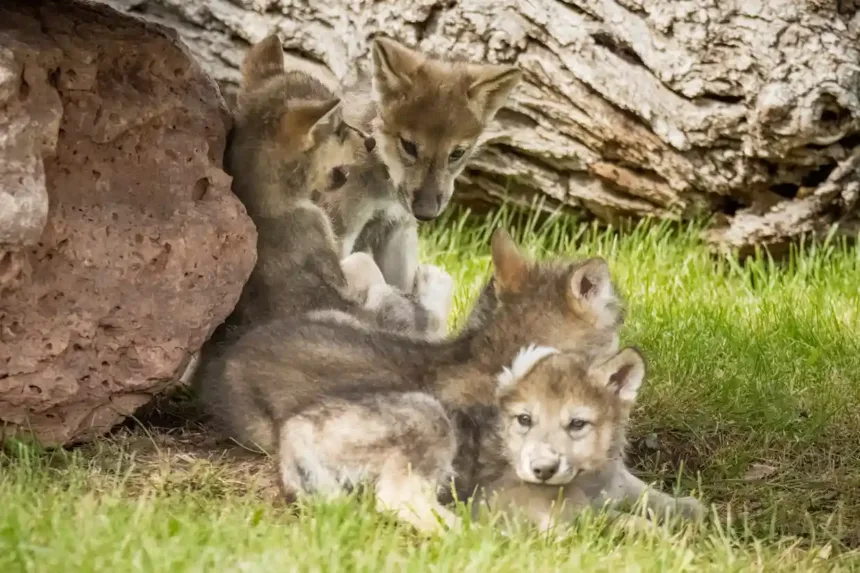
Idaho paid out $2,000 apiece this spring for 12 newborn wolf pups, state fish and game records show, including what looks like at least one entire litter killed at or near its den. Read as policy rather than a hunting anecdote, those payments show what happens when a hard population target meets an open checkbook and no rule about age.
All 12 pups were shot with rifles by three hunters on a single day, April 25, in the state's northern panhandle. They were probably one to three weeks old. In at least two cases, the same records that list rifles also state that no weapon was used, a contradiction nobody has explained.
The paperwork says the pups were taken by still stalking, in which a hunter spots an animal and creeps close for a shot. Wolf experts find that implausible. Carter Niemeyer, who worked nearly three decades in the Agriculture Department's wildlife services, said he had never heard of so many wolves killed by stalking on one day; experts believe the hunters found dens, waited for births and pulled the pups out.
That is not hard to do. Doug Smith, the biologist who oversaw Yellowstone's wolf program, said parent wolves typically retreat about 50 yards and bark rather than defend the den. He warned that wiping out a full litter can splinter a pack or end it.
The pack’s life hinges on those pups. They’re the glue that holds the pack together.
Doug Smith, biologist who oversaw Yellowstone's wolf program
A target with no brakes
The legal structure behind this was built deliberately. A law passed five years ago by Idaho's Republican-led legislature relaxed hunting seasons, dropped limits on killing methods and let people hire third parties to kill wolves. Permits are unlimited and cost $14 for residents and $32 for nonresidents.
In 2021, state game officials also struck a deal with the Foundation for Wildlife Management, a nonprofit that wants fewer wolves so deer and elk numbers grow, to reimburse hunters and trappers who prove a kill. Covered costs include truck payments, fuel, ammunition and outdoor clothing, paid from a blend of taxpayer money, license revenue and foundation contributions.
Idaho fish and game biologist Cory Mosby confirmed the 12 animals were pups and said no state regulation forbids killing them. Spring closures would normally shield newborns, but the 2023 state management plan requires culling the population to about 650 wolves in spring, the season when numbers peak.
Here the incentives become hard to defend, in this analysis. The population peaked near 1,600 in 2019 and still topped 1,100 this year. Mosby said reaching the target would mean killing more than a third of all wolves every year, and that rules would likely tighten only as numbers fall, so the pressure is greatest precisely when dens are full.
Brooks Fahy, director of the advocacy group Predator Defense, calls the arrangement a bounty and asks what expense receipts could justify payment for pups weighing about 12 pounds. Neither the foundation nor the Idaho wolf depredation control board, the state body overseeing third-party wolf payments, responded to requests for comment.
I’m a sportsman and that’s stooping pretty low – collecting bounties on wolf pups.
Carter Niemeyer, former USDA wildlife services employee
The federal backdrop
Pup killings are not new in Idaho. In 2021, federal wildlife control officers killed eight pups from the Timberline pack outside Boise to head off conflict with a rancher, drawing protests from environmental groups and from students who had adopted the pack as their high school mascot.
What has changed is Washington's posture. Trump's September executive order nudged the Interior Department toward lifting gray wolves' Endangered Species Act protections across the lower 48 states, though those protections remain in federal court. At the signing, he appeared to ask an Arizona rancher whether people could now kill Mexican gray wolves, a subspecies that is still protected and nowhere near meeting delisting requirements.
Fahy's worry is that ranchers and hunters heard those remarks as permission. Idaho's records cannot answer that, but they show a state system already willing to pay for wolves too young to have teeth worth sampling.