A British doctor who caught Ebola while helping fight the outbreak in the Democratic Republic of Congo is being treated in a high-level isolation unit in London. The doctor is the first UK national confirmed to be infected in the current epidemic.
The doctor, who has not been identified, had been sent to DR Congo by a humanitarian organization to assist with the response. The Department of Health and Social Care said Thursday that the patient was returned on a medical evacuation flight arranged jointly by the UK and Congolese governments and their international health partners.
Dr. Renu Bindra, a deputy director at the UK Health Security Agency, said British health authorities have well-established infection control procedures for cases like this and that the risk to the wider public remains low.
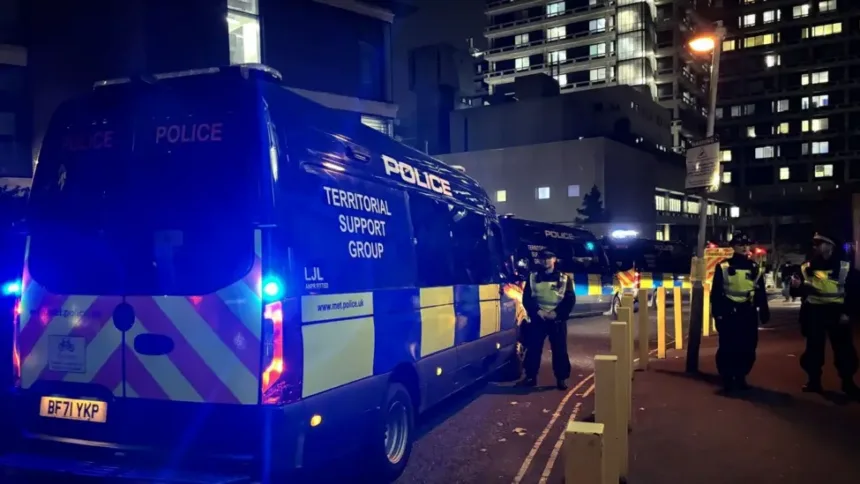
The flight landed at RAF Northolt. From there, a convoy took the patient to the Royal Free Hospital in Hampstead, north London, with large police vans at the front and rear and two ambulances and a support car in between. Police stopped traffic and kept people back as the vehicles arrived.
Inside the isolation unit, strict protocols keep the patient away from members of the public, and staff providing care wear personal protective equipment among other measures meant to block transmission.
The hospital has handled such cases before. It successfully treated three health workers evacuated during the 2014-2015 West African outbreak, three of only four confirmed Ebola cases ever recorded in the UK. The fourth, in 1976, came from a laboratory needle incident. None of those patients died.
An outbreak still spreading
DR Congo's health ministry declared the current outbreak in May. It has since surpassed 10,000 cases and 5,000 deaths, making it the second largest on record after the West African epidemic of the 2010s. The fatality rate stood at 48.6% at the end of last month.
Cases have also been confirmed in Kenya and Uganda, and last month Nigeria confirmed a case in its capital, Abuja.
The outbreak is driven by the Bundibugyo variant, for which no vaccine is approved. The World Health Organization said experts have recommended adding two candidate vaccines, one from the University of Oxford and the Serum Institute of India and another from Moderna, to an ongoing clinical trial once Congolese health authorities approve them. It would be the first time shots designed specifically against Bundibugyo are tested during an outbreak.
Ebola spreads through direct contact with the bodily fluids of infected people, such as blood or vomit, or with dead bodies. Illness typically begins two to 21 days after exposure with fever, aches and fatigue, and can progress to diarrhea, vomiting, unexplained bleeding and organ failure.