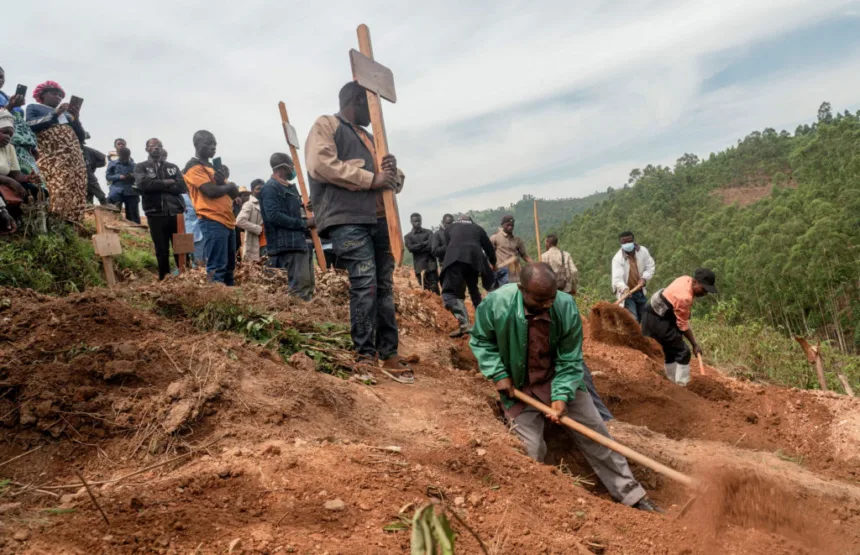
Ebola has now killed 5,026 people in Congo, Health Ministry figures showed Saturday, and most new infections are appearing outside the contact lists responders use to track the disease.
The ministry counts 10,351 people infected, a fatality rate near 50%. Another 2,788 patients have recovered.
Only the 2014-2016 West Africa epidemic, which killed 11,000 people across several countries, has been deadlier. The current outbreak, declared in mid-May, is caused by the Bundibugyo virus, which has no known vaccine or treatment, so health workers can only manage symptoms.
Gaps in tracing
About 80% of new cases are emerging from outside monitored contacts, the Africa Centers for Disease Control and Prevention says. That leaves authorities unaware of how most patients were exposed.
One-third of recorded deaths happened outside treatment centers, before the victims could be tested, said Dr. Patrick Otim, a program area manager at the World Health Organization. Health officials say both gaps allow the virus to spread through communities, beyond the reach of workers who can manage infections under medical protocols.
These are people we never had opportunity to try to save them and it is one of the biggest concerns for us in this outbreak.
Dr. Patrick Otim, World Health Organization program area manager
The virus has now reached 67 of Congo's 178 health zones and eight of its 26 provinces, with active cases in 50 of those zones. Ituri and North Kivu remain the epicenters, with 9,782 confirmed cases and 4,792 deaths between them.
War and distrust
Eastern Congo is also a war zone. The government is fighting a range of armed groups there, led by the Rwanda-backed M23, while Islamist insurgents from the Allied Democratic Forces attack border areas near Uganda. The violence limits where health workers can go.
Responders also face widespread disbelief about the disease, which has led to a string of attacks on staff and clinics. A nurse was killed last week while answering an Ebola alert, and a ruling-party politician was killed in September after promoting health measures on the radio.
Unpaid workers walk out
Pay has become another breaking point. Workers at a treatment center in Tchomia, in Ituri, walked off the job Friday over four months of unpaid wages, with five confirmed patients and 10 suspected cases in their care.
We are tired of requesting our salaries. If they want to pay us, they will. … Today, being able to feed our families has become a real problem
Moise Mugenyi, striking Ebola treatment center worker
Dr. Justin Mukonkole, the acting head of response operations in Ituri, said the strikers should be patient while the government answers their demands. Strikes over late payments have repeatedly shut facilities, and services at some treatment centers in Beni, North Kivu, have stopped.
Alain Siwako, an elected official in Beni, blamed the city's mounting cases on a lack of fuel and money from the central government.
Spread beyond Congo
The disease has also crossed more borders. Kenya and Nigeria both confirmed cases in October: Kenya now has eight cases and two deaths, and Nigeria's lone patient was evacuated to Switzerland.
With Uganda affected earlier, this is the first outbreak recorded in three African regions and the most geographically widespread the continent has seen.