Florida has confirmed 485 dengue fever cases acquired inside the state this year, making it the largest local outbreak in decades. Nearly all of them, about 95%, were recorded in the Tampa Bay area.
The pace has not slowed. State surveillance counted 60 new infections in the single week from Oct. 18 to Oct. 24, the Florida Department of Health said.
Hillsborough, Pasco and Pinellas counties declared emergencies in late September. The declarations let them buy supplies and spray more quickly and seek state and federal reimbursement, and Hillsborough has since extended its local emergency as transmission continues.
The local tally does not include more than 300 dengue cases Florida residents picked up while traveling this year. Those imported infections keep seeding the virus into mosquito populations at home.
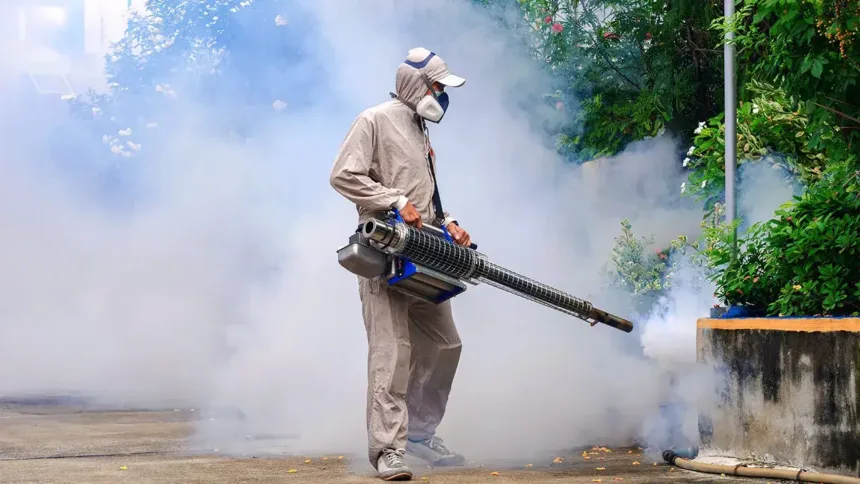
The Florida Mosquito Control Association said crews are expanding targeted ground spraying, aerial treatments and inspections of individual properties. In Hillsborough County, mosquito management teams have turned to aerial spraying.
How the virus spreads
Dengue is a virus passed mainly through bites from infected Aedes aegypti and Aedes albopictus mosquitoes. The Centers for Disease Control and Prevention lists fever, severe muscle and joint pain, nausea and rash among its symptoms, and serious cases can turn fatal.
Unlike species that bite mostly at dawn and dusk, these mosquitoes feed heavily in daylight and flourish in humid neighborhoods. Health officials call them container breeders because a tablespoon of standing water is enough for them to lay eggs.
The Aedes mosquitoes that can transmit dengue are active during the day and thrive in warm, humid environments like those found in Florida,
Entomologist spokesperson, SC Johnson Center for Insect Science and Family Health
Officials are asking residents to check their yards every week and to empty or cover birdbaths, gutters, planters, old tires and other outdoor containers. They also recommend repellents with DEET, picaridin or oil of lemon eucalyptus, used as the label directs.
Symptoms and warning signs
Most people who catch dengue have mild symptoms or none and recover within two weeks, according to Mayo Clinic. When illness does appear, it typically starts four to 10 days after the bite.
Severe dengue can develop quickly, within 24 to 48 hours after the first fever breaks. Persistent vomiting, intense abdominal pain, trouble breathing, bleeding from mucous membranes and extreme lethargy are signals to get emergency care right away.