
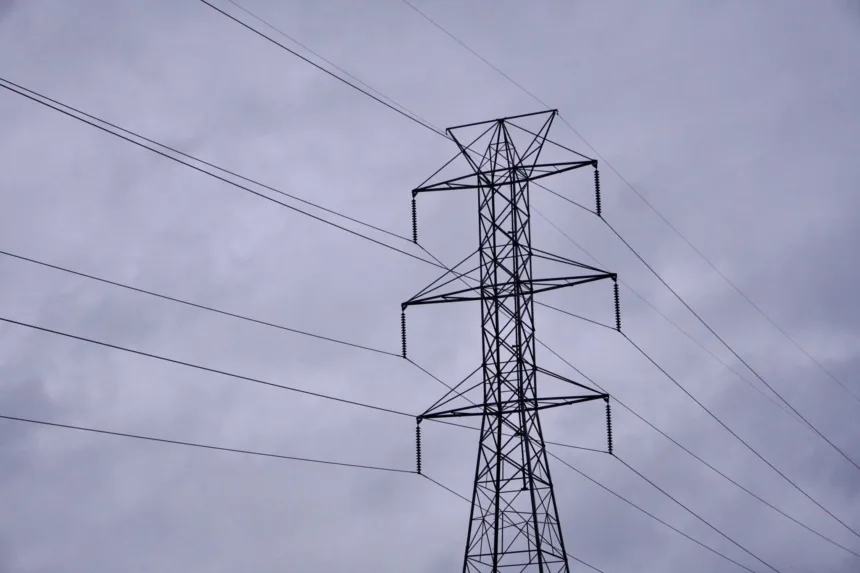
Sixty Maryland landowners have asked the U.S. Supreme Court to hear their challenge to rulings that let PSEG Renewable Transmission send surveyors onto their land for a proposed 67-mile power line across the northern part of the state.
The petition, filed Wednesday, argues that the 4th U.S. Circuit Court of Appeals went further than any other circuit by upholding PSEG's access on the theory that the company likely holds eminent domain power, without first establishing that it actually does.
Lawyers for the landowners wrote that the ruling may look like a procedural quirk but carries devastating consequences for private property rights. They also contend the preliminary injunction behind the surveys overreached, since such orders exist to protect existing rights rather than to create new ones.
In an ordinary case, the final judgment corrects a wrong prediction. Here no judgment can, because the entry will already have happened,
Pacific Legal Foundation attorneys for the landowners, in the petition
The dispute centers on the Maryland Piedmont Reliability Project. If the Maryland Public Service Commission signs off, the line would cut through rural stretches of Carroll, Frederick and Baltimore counties.
Regional grid operator PJM Interconnection found the project necessary to prevent blackouts and other infrastructure problems as data centers drive up power demand in the region while power plants retire.
Surveyors have been working since June 2025, when U.S. District Judge Adam Abelson granted the New Jersey-based company a preliminary injunction. That order has since been extended to hundreds of properties whose owners object.
The landowners have long argued PSEG should stay off their land until the state approves the line. The appeals court called that approach unworkable, because the company must complete the surveys before it can win commission approval.
Much of the fieldwork is now finished. A PSEG filing in September said just nine archaeological surveys were still outstanding on the land covered by the first suit. Crews have also done boundary surveys, forest and wetland mapping, habitat assessments and acoustic bat studies.
The petitioners say the justices should still take the case because the question could come up again whenever the Federal Energy Regulatory Commission picks an out-of-state company to build a transmission line. They acknowledged that Maryland's Power Plant Research Program and utilities already operating in the state would have the eminent domain power needed to survey.
The Pacific Legal Foundation, a public interest firm focused on property rights and individual liberties, represents the landowners without charge. The firm says it has taken 21 cases to the Supreme Court since its founding 53 years ago and counts 18 wins there.