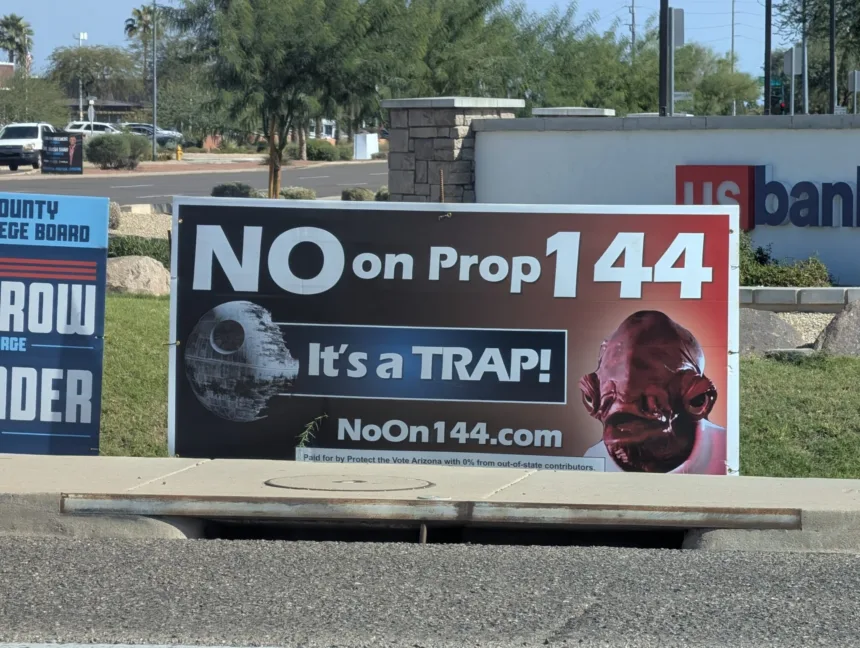
Arizona voters on Tuesday defeated Proposition 144, a sweeping election measure that would have limited registration and voting to citizens. Voters in Alaska, Arkansas, Kansas, South Dakota and West Virginia went the other way, approving new requirements that explicitly bar noncitizens from voting.
The Arizona outcome stands apart from a recent run of results. From 2018 through last year, states put 15 citizenship voting requirement measures on the ballot, and voters approved every one.
Arizona's proposal also reached well beyond citizenship. It would have required government-issued ID for both in-person and mail-in ballots, banned foreign contributions in elections and let voters have their ballots counted at their polling precinct on election day.
Republicans and other backers argued the package would make state elections faster and more secure. Voting rights groups and other critics warned it could end no-excuse mail-in voting. Opponents were surprised when it failed.
At the state level, the measures change little on paper. Federal law already prohibits noncitizens from voting in federal elections, no state lets them vote in statewide contests, and most states, including Arkansas, Kansas and South Dakota, already require citizenship in their laws or constitutions.
Sponsors, mostly Republicans, said the real target is local elections. They want to block cities and other local governments from allowing noncitizen voters, as some municipalities in California, Maryland and Vermont have done, and legal experts say some state laws that appear to require citizenship can be read to permit noncitizen voting in certain elections.
West Virginia voters overwhelmingly backed writing the ban into the state constitution. State Sen. Patricia Rucker, the Republican who sponsored the legislation behind the amendment, argued in September that it would stop a future legislature from rewriting election law through an ordinary bill, and on Tuesday she said she was proud of the result.
The supermajority in our legislature has a documented history of attempting to restrict voting in various ways,
Amii Castle, University of Kansas law professor
In Kansas, critics fear the new amendment could make legal voting harder down the road. Amii Castle, a University of Kansas law professor, warned that lawmakers could cite the change as a pretext to demand that voters document their citizenship.