
Analysis: Democrats will control both chambers of Congress starting in January after winning the midterm elections on voter anger over prices, and the allies who helped elect them are already making clear that their support is conditional.
The scale of the win leaves little room for excuses. As of Wednesday afternoon, Democrats held 237 House seats, well past the 218 needed, after flipping 29 Republican seats, including in districts Republicans had redrawn. In the Senate, the party flipped seven seats, giving Democrats and the independents who caucus with them 54.
The reason is not hard to find. Two years ago, Donald Trump won back the White House on frustration over high prices and a promise to lower costs on day one. This year, voters blamed him for climbing inflation and record fuel prices as his war in Iran entered its ninth month and sweeping tariffs stayed on imports.
Democratic Rep. Analilia Mejia, who won reelection easily, said Wednesday in Newark that voters swung from Trump to her party within 24 months because their leaders only nibbled around the edges of the cost-of-living crisis. In her telling, those voters are not fickle; they simply saw no results.
That logic cuts both ways, and Democrats' own allies are saying so. Shawn Fain, leader of the United Auto Workers, whose union of roughly 1 million active and retired members backed Abdul El-Sayed's winning Senate campaign in Michigan, called the election a mandate for change but said the union would be first to call Democrats out if they fail to deliver.
Rep. Greg Casar of Texas, who chairs the roughly 100-member Congressional Progressive Caucus, said the results were not a sign that the party's problems are solved, nor an endorsement of the status quo or of tinkering. Rep. Pramila Jayapal of Washington said the party is still not particularly popular and has the next two years to show it can deliver bold populist change.
This is a message that people in this country are mad as hell, and are giving Democrats a shot to show them we can do something about it.
Rep. Greg Casar, chair of the Congressional Progressive Caucus
The promises on the table
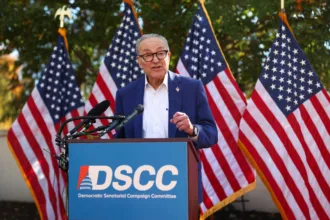
Senate Minority Leader Chuck Schumer, poised to lead the chamber again, named three priorities: lowering the cost of living, cleaning up corruption in government and checking what he called Trump's chaos at home and abroad, including the Iran war. He hinted Democrats could use the power of the purse to end that war and said they would drive down costs with the president or without him.
Rep. Ted Lieu of California, vice chair of the House Democratic Caucus, offered a more specific list: bills to reverse roughly $1 trillion in Medicaid cuts over 10 years from the GOP's tax and spending law, restore enhanced Affordable Care Act tax credits that expired in December 2025, stop Trump's tariffs and stop the Iran war.
House Minority Leader Hakeem Jeffries, now a step closer to the speakership, promised a dramatic change in direction beginning on Day One. Newcomers are adding demands of their own: Democrat Will Lawrence, who unseated Republican Rep. Tom Barrett in Michigan's 7th District, said regret among local Trump voters over the Iran war gives Congress a mandate to pass a war powers resolution.
The hard part
Every item on those lists still runs through a Republican president. Rep. Rob Menendez, speaking in Newark on Wednesday, said he sees a chance Trump will cut deals with the new Congress on elder care and child care because he wants to salvage what he can. That may prove optimistic, and Schumer notably sidestepped a question about scrapping the filibuster.
The majority also brings the power to investigate Trump's first two years back in office, including his business ventures, war decisions and mass deportation campaign, and Schumer vowed investigations and lawsuits whenever Trump defies the law. In this reading, oversight may energize the base, but the voters who swung this year were asking about prices, and that is the ledger on which this majority will be judged.