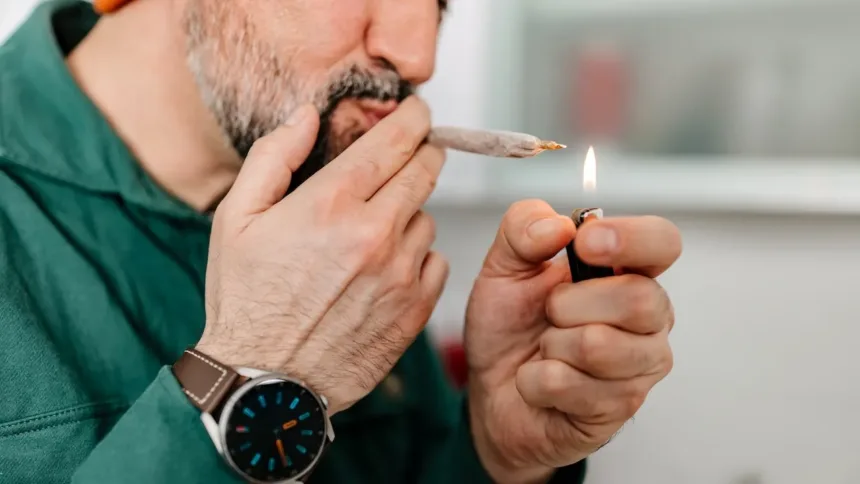
Adults who used marijuana just one to five days a month had 40% higher odds of reporting a past stroke than nonusers, according to a study of nearly 450,000 Americans set for presentation at the American Heart Association's Scientific Sessions in Chicago, running Nov. 6 to 9.
The heaviest users, those who reported cannabis use on 16 to 30 days a month, had 25% higher odds of a prior stroke. The researchers found no statistically significant connection between cannabis use and heart attacks.
For cardiovascular disease as a whole, light users had 23% higher odds of reporting a history of the condition than nonusers, while frequent users had 21% higher odds.
That pattern caught the researchers off guard. Aabha Divya, who teaches cardiothoracic surgery at Tulane's medical school and led the work, said the team had expected heart disease odds to climb steadily with more frequent use, but instead found elevated odds in both the light and heavy groups.
Kristen Worth, an Ohio doctor who advises NuggMD, a company offering medical marijuana evaluations by telehealth, said the result does not fit a simple dose-response curve. Worth, who had no role in the research, cautioned against reading it as a sign that heavier use is safer.
How people took the drug made no difference, the researchers said. The risk held steady whether participants smoked, vaped or ate edibles such as gummies.
The team drew on survey answers gathered from 2020 through 2024 by the CDC's Behavioral Risk Factor Surveillance System. Over that span, the share of adults reporting cannabis use in the past month rose from one in 10 to one in six, a 51% jump, the researchers said.
What the study cannot show
Because the study was observational and captured a single moment in time, it can show only a statistical association, not that cannabis causes strokes or heart disease.
The data came from telephone surveys, so participants may have misremembered their diagnoses or drug use. The researchers also did not track product strength, THC potency or how much people consumed, and the findings are preliminary until they pass full peer review.
Robert L. Page II, a clinical pharmacy professor in Colorado who volunteers as an expert for the heart association and was not involved in the study, said cannabis has long been treated as harmless in patients who also smoke, a view he called wrong. He said doctors should ask about marijuana the same way they ask about cigarettes and alcohol.
Worth urged patients not to make sudden treatment changes or stop prescribed heart medications because of a single preliminary study. She said anyone using cannabis, whether medically or recreationally, should talk through their heart history, risk factors and medications with a health care provider.