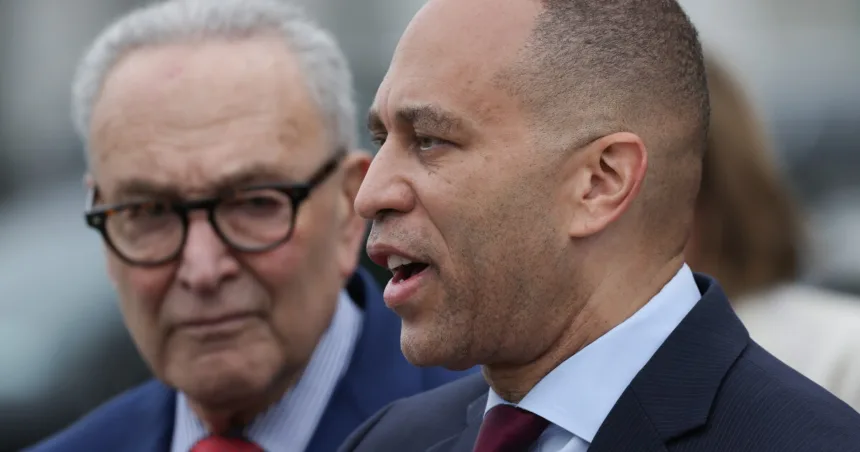
Democrats who captured both chambers of Congress in the midterms are preparing to send President Trump bills on health care, tariffs and the Iran war, betting that his vetoes will cost Republicans more than any compromise would.
The new majority takes power in January without enough votes to override a veto, and Senate Republicans will likely be able to filibuster. Trump has sent mixed signals, saying both that he would veto everything and that he could make deals with Democrats.
Party leaders have signaled bills to cut health care costs, restore enhanced premium tax credits and reverse Medicaid cuts. Sen. Kirsten Gillibrand dared Trump to veto a bipartisan bill restoring coverage for people who lost Medicaid, arguing that rejecting measures to lower grocery or housing prices would make 2028 favorable for her party.
Hakeem Jeffries, the presumptive House speaker, said Democrats would push a war powers resolution to end the Iran war and force Trump to explain any veto. Presidents of both parties have largely sidestepped that law, so Democrats could instead write a ban on funding military operations in Iran into the bills that keep the government open.
The war has driven up fuel prices, but control of Congress offers no quick fix. Oil prices are set by a complex global market that lawmakers cannot directly steer, though Democrats also plan to reassert congressional authority over tariffs.
Tools and limits
Rebecca Cooke, the Wisconsin Democrat who unseated Republican Rep. Derrick Van Orden, said voters need to see their lives improve when they elect Democrats.
Budget reconciliation lets certain fiscal bills clear the Senate with a simple majority, bypassing the filibuster. Democrats used it for health care changes in 2010, Republicans for tax cuts in 2017 and for Trump's signature tax and spending bill, and Sen. Elizabeth Warren wants her party to use it to undo Republican health cuts, expand coverage and fund universal child care.
Bobby Kogan of the Center for American Progress said the real power of a majority is deciding what reaches the floor. He cited the Epstein files, which the House voted nearly unanimously to release after lawmakers maneuvered around Speaker Mike Johnson; after winning Congress in 2006, Democrats likewise pushed a minimum wage increase that President George W. Bush signed.
Competing readings of the vote
Matt Bennett of Third Way warned that voters may have heard only the promise of better lives, not the plan to check Trump for two years first. Rep. Brad Schneider of Illinois, who chairs the New Dems coalition, said Democrats must constantly explain what they are attempting and why.
I don't think the American people sent this many Democrats to Congress to hear a bunch of talk about what they can't do. That will go over like a lead balloon,
Lindsay Owens, president of Groundwork Collaborative
Trump said the results were not a hit on him, conceding only that the Iran war pushed gasoline prices up in what he called the short term. Johnson said Republicans would have had to defy more than a century of midterm history to keep the House, while outgoing Florida Gov. Ron DeSantis called the election an extinction-level event.
Democrats read the vote as a broader verdict. Jeffries, in line to become the first Black House speaker, called it a rebuke of MAGA extremism, and Senate Minority Leader Chuck Schumer declared an end to what he called Trump's supplicant Senate, while acknowledging that some voters may doubt Democrats can deliver economic relief.