Democrats' sweep of both chambers of Congress gives them the power to try to undo Republican cuts to Medicaid and the Affordable Care Act. President Donald Trump's veto pen still stands between the party and most of its health care agenda.
Projections Wednesday afternoon showed Democrats with at least 237 of the 435 House seats and at least 54 Senate seats, with Senate races in Alaska and Mississippi still uncalled. Party leaders plan to frame the results as a mandate on health costs, which voters ranked as a top worry in preelection surveys.
Larry Levitt, executive vice president for health policy at KFF, called it a health care election and said the size of the win creates huge expectations. He also said Democrats have roughly one year to act, because Congress tends to do little in a presidential election year like 2028.
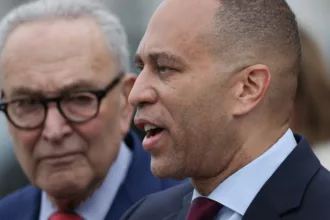
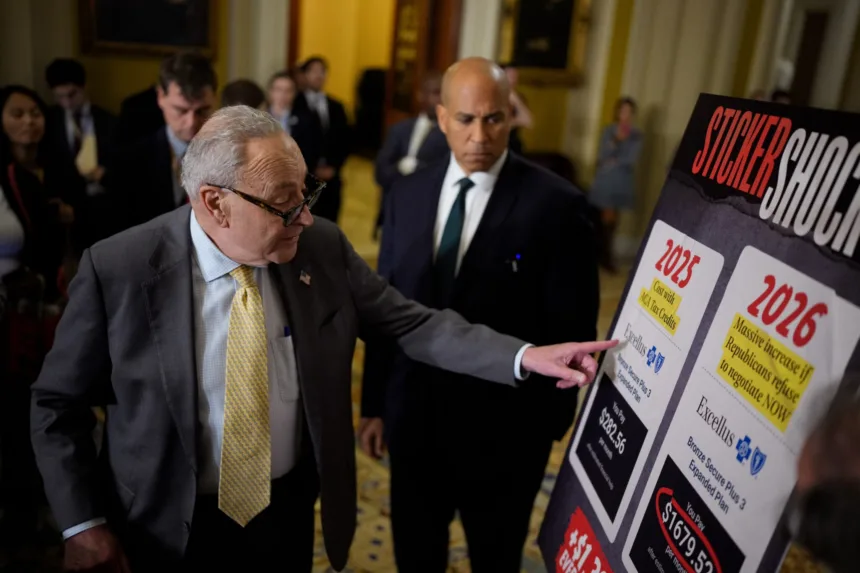
The first target is likely the enhanced ACA premium subsidies, a pandemic-era boost that expired last year when Republicans and Trump chose not to renew it. House Democratic leader Hakeem Jeffries, widely expected to become speaker, said Wednesday that the party should bring the aid back.
The calendar is tight. Leslie Dach, who chairs the advocacy group Protect Our Care, said Democrats could revive the subsidies and stretch open enrollment for 2027 coverage, which closes Jan. 15 in most states, but only by moving within days of taking power. KFF researchers project benchmark premiums will climb an average of 13% for 2027.
Bargaining with the White House
Levitt sketched three possible routes. In the first, Democrats pass straight reversals of the Medicaid and premium cuts and Trump vetoes them.
I also expect President Trump to veto any bill that the Democrats pass to do this, if they are able to pass it
Larry Levitt, executive vice president for health policy at KFF
A second route would mean bargaining for the president's signature, perhaps by delaying subsidy cuts or adding Trump priorities such as health savings accounts. A third would lean on populist ideas with appeal in both parties, including lower drug prices, price transparency and breaking up big insurance conglomerates.
Trump has signaled some openness, saying early Wednesday that he had talked with Democratic leaders and that voters wanted him to work with them. Republicans, though, campaigned on the One Big Beautiful Bill Act's Medicaid overhaul as a signature achievement, and its work requirements are expected to begin Jan. 1.
Levitt said he doubted the Medicaid cuts were a personal priority for Trump, who promised during the 2024 campaign not to cut the program. Michigan Sen.-elect Abdul El-Sayed has said he would gladly name his health plan after Trump if that won the president's signature.
Money is the sticking point. Levitt put the Medicaid cuts at nearly $1 trillion over 10 years and the cost of restoring ACA subsidies in the hundreds of billions, predicting Democrats may fight among themselves over whether to offset it. Allison Orris, a partner at Manatt, warned that even delaying the 2025 changes will cost money.
Oversight and subpoenas
Spending deadlines could offer leverage. Rodney Whitlock, a consultant who once worked for congressional Republicans, said a likely December stopgap funding bill sets up a spring showdown over Medicaid cuts, while Sabrina Corlette of Georgetown's Center on Health Insurance Reforms expects subsidies to be folded into a broader budget package.
Committee control also brings subpoena power. Jeffries has promised aggressive oversight of the administration, and Democrats on the House Oversight Committee previewed possible investigations in a report in June.
Targets include undisclosed drug-pricing deals Trump struck with drugmakers in exchange for tariff relief, and the record of top health official Robert F. Kennedy Jr., who dismantled vaccine recommendations and slashed agency staff and public health funding. Because Trump's Justice Department largely enforces subpoenas, it is unclear how many documents Democrats can actually obtain.
Before the new Congress arrives, Republicans keep their majority through a lame-duck session expected to include a confirmation vote on Heidi Overton to lead the Food and Drug Administration, which has lacked a leader since May. Democrats uniformly oppose her.
Longer-term ideas include a federal fix for the 10 states that have not fully expanded Medicaid, letting young adults stay on a parent's insurance past age 26, and lowering the Medicare eligibility age to 60 or younger.