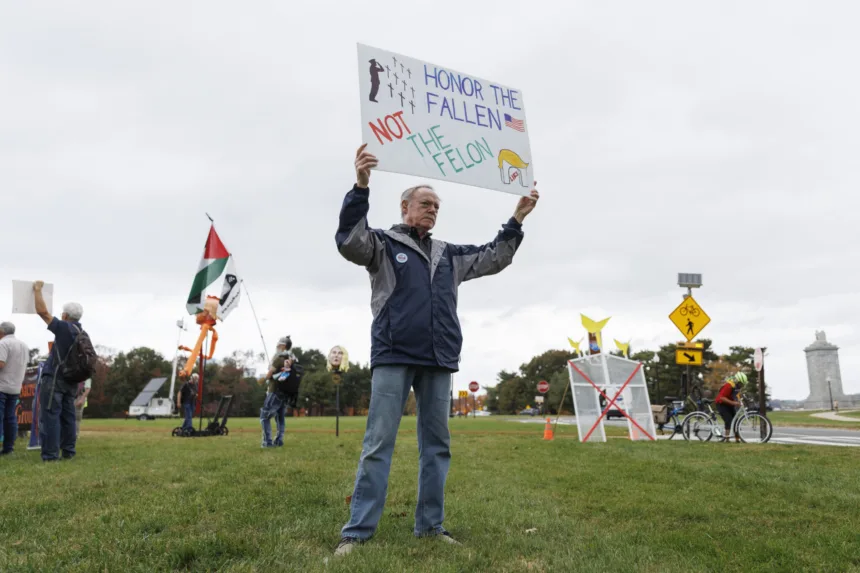
Analysis: President Trump's proposed 250-foot triumphal arch on Memorial Circle won approval from the National Capital Planning Commission on Thursday. A few hours later, U.S. District Judge Tanya Chutkan barred any construction for 14 days. In our view, that pause buys time but settles nothing, and the sharpest tool for stopping the project belongs to Congress.
The vote was never in much doubt. Of the commission's 12 members, eight are Trump picks, heads of federal agencies or Republican lawmakers, and they approved the arch after hours of hostile testimony from architects, civic organizers and local residents.
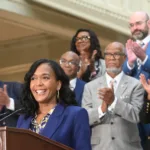
Rep. Jared Huffman warned the commissioners backing the project that their legal argument would fail in court and called the arch illegal. His warning changed nothing.
Challenges from veterans, Public Citizen, Virginia and the District of Columbia now sit together before Chutkan. At the center is a 1986 law, the Commemorative Works Act, which reserves the last word on memorials in the capital to lawmakers rather than the White House. The administration's answer is that a 101-year-old authorization for a pair of never-built 166-foot columns at Memorial Circle also covers a far larger arch.
Trump has since described the structure as a combined military complex and triumphal arch equipped with drones and snipers. No such features appear in the plans submitted for review, and the National Park Service denies knowing about them.
Litigation alone may not be enough. In August, the Supreme Court allowed Trump to keep building his ballroom while challenges to its legality continue, and arch crews are expected to work 20 hours a day once construction starts.
That pattern argues for acting before ground is broken. The longer crews work, the easier it becomes to claim that stopping midway is the bigger waste, and any later reversal would leave the public paying to repair the site.
A bill with no clear path
Reps. Dina Titus of Nevada and Don Beyer of Virginia, both Democrats, introduced H.R. 9047, the Arlington National Cemetery Viewshed Protection Act, in May. It would block plans for the arch, end federal money for it permanently and require congressional sign-off for any arch above 50 feet on capital-region parkland.
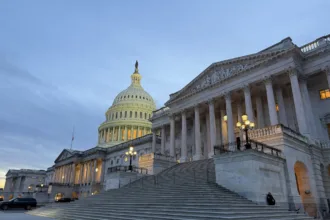
The bill has 46 co-sponsors, none of them Republican, and has never had a committee hearing. It will die when this Congress ends, but Democrats take majorities in both chambers in January, when the commission's two congressional seats pass to new Democratic committee chairs and the panel splits evenly, 6 to 6.
Even a reintroduced bill could be vetoed, and an override would require Republican defections that look improbable.
The money lever
Money is the more direct lever. The White House earmarked $15 million for the arch through the National Endowment for the Humanities, $2 million outright and $13 million in matching grants, and Chutkan said in court she still did not know how the rest would be paid for.
a project that has no legal basis to proceed is an abuse of taxpayer dollars.
Reps. Dina Titus and Chellie Pingree, in a letter to the president
Current stopgap funding runs out Dec. 11, three weeks before the new Congress is sworn in, and keeping the government open will take 60 Senate votes. In our view, Democrats should withhold theirs unless the bill carries a one-sentence rider barring the Park Service, the Interior Department and the endowment from spending anything on the arch.
That would force Trump to either accept the restriction or shut down the government over the monument, a choice that would also put Republican senators facing voters in 2028 on the spot.