Hoax bomb threats disrupted flights across Europe on Friday for the third time this week, and the campaign widened to newsrooms, forcing Ireland's public broadcaster RTÉ to clear its Dublin building.
No explosives had turned up on any aircraft as of Friday. Authorities said flights to and from Lisbon, Rome, Prague and Sofia were among those targeted.
Hungary put fighter jets in the air. Defense Minister Romulusz Ruszin-Szendi said military aircraft shadowed passenger planes crossing Hungarian airspace on routes linking Brussels with Sofia and Prague with both Bucharest and Cyprus. He said NATO had directed an air patrol close to Hungary's frontier with Romania, the first reported involvement of the Western alliance.
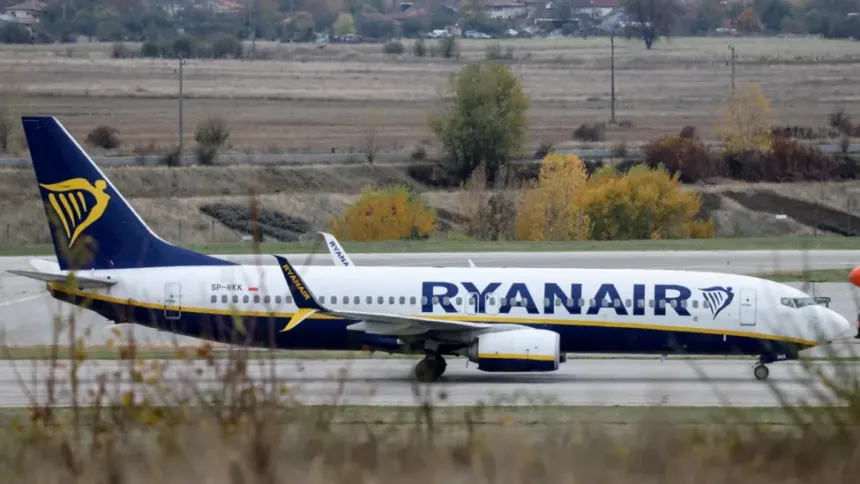
Czech police logged threats against nine flights in or out of Prague, though the airport said none was canceled. France said four aircraft over its territory were threatened, and every one landed safely. Ryanair said one of its flights between Lisbon and Rome was also targeted.
In Denmark, police said threats aimed at Copenhagen airport traffic did not appear to put travelers at risk. The airport said it was running as usual.
Threats spread to newsrooms
RTÉ briefly sent staff, including on-air radio and television presenters, out of its Dublin offices after an emailed threat arrived Friday morning. Presenter David McCullagh later told RTÉ Radio One listeners that the message claimed a bomb would go off within 45 minutes.
The Irish government said similar hoax claims reached Virgin Media, Newstalk radio and the Irish Independent newspaper. Staff at the Dublin offices of TodayFM were also told to leave, and British broadcaster Sky said it had received a security threat, assessed it and reported it to authorities.
Emails to RTÉ and Bulgaria's Nova TV were signed by a purported Mikhail Andropov under a heading addressed to the West, and presented the threats as a prelude to more disruption across Europe.
No connection between the airline and media threats has been established. Still, the Irish government said that coming so soon after the aviation chaos, the incidents likely formed a coordinated campaign of disruption, though it was unclear who was responsible. Irish police said they knew of threats against media organizations in Ireland and elsewhere in Europe.
Hoax threats such as these cause fear, distress and disruption to people going about their daily lives and activities; they achieve no positive purpose whatsoever.
Irish government statement
Prime Minister Micheál Martin called the situation worrying and said public safety was his government's first priority. He said the threats were being taken seriously, though it was not yet known whether individuals or a coordinated attack lay behind them. Dublin is set to host two high-profile European Union meetings next week.
A week of hoaxes
Friday's threats followed disruptions to about half a dozen flights on Tuesday and more than two dozen on Thursday, some of which made unplanned landings or flew under fighter escort. A cruise ship also received a bomb alert earlier in the week. The UK has described the threats as a malicious hoax.
Male State, a Russian extremist group named in this week's threats to Italian airports, denied any role. A Telegram account tied to the group and its founder, Vladislav Pozdnyakov, ridiculed the suggestion and said the group had not existed for many years.