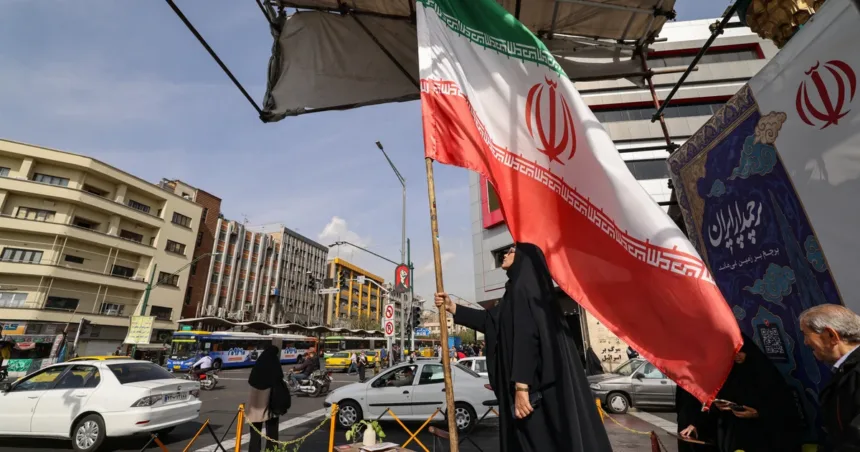
Iran put the burden of ending the war on Washington Monday, with foreign ministry spokesperson Esmaeil Baqaei saying the next move belongs to President Trump in indirect talks brokered by Qatar, Pakistan and other mediators.
The ball is in the U.S. court, because our demands have been stated very clearly and transparently, and Iran's demands are reasonable and logical
Esmaeil Baqaei, Iranian foreign ministry spokesperson
Foreign Minister Abbas Araghchi said the negotiations were proceeding very intensively but that everything hinges on Washington's political rationality. He repeated that Tehran will not retreat from its conditions for a deal to end the war and reopen the Strait of Hormuz.
A two-day plan
Araghchi said Saturday that Iran had handed Qatari mediators a plan cutting the implementation period of a potential deal from seven days to two. Qatar had suggested five days.
Under the shorter timeline, the United States would take a series of steps on the first day and the strait would reopen on the second, according to a statement from the Iranian government. The original seven-day version would have reopened the waterway on the sixth day.
Iran's terms are unchanged. It wants frozen assets released, the naval blockade of its ports and sanctions lifted, and fighting halted on all fronts, including Israel's battles with Hezbollah in Lebanon and Hamas in Gaza. In return, Iran would reopen the strait to commercial shipping and commit to more talks on its nuclear program.
Trump rejected Iran's initial proposal, presented in September, though both sides have since traded revisions. Ahead of a campaign rally in Iowa on Sunday, he said he would finish the war soon one way or the other.
We've had such a victory, and we'll put it away very soon, one way or the other
Donald Trump, U.S. president
Trump has also kept military threats in play. On Saturday he said the U.S. still had one or two potential targets to take care of, citing a suspected nuclear complex at Pickaxe Mountain, and on Sunday he said Tehran may need to get the hammer. He has repeatedly hinted he could resume attacks after the midterm elections.
Iran's Supreme Leader, Ayatollah Mojtaba Khamenei, warned Saturday that any renewed fighting with the U.S. would have no geographical limitations.
Attacks at sea
The Iranian Navy claimed Monday that another oil tanker caught fire after hitting a sea mine near the eastern entrance to the strait. Iran said 11 ships had caught fire in or near the waterway over nine days, challenging U.S. Central Command chief Adm. Brad Cooper's assertion that the main transit routes remain free and clear.
The U.K. navy's Maritime Trade Operations center said there were 30 attacks on commercial vessels in the region in October, a record. Britain's UKMTO agency said another vessel was struck Sunday by an unknown projectile in the strait.
A liquefied natural gas carrier, Al Mayeda, owned by the Qatar Gas Transport Company, was attacked Friday with unidentified objects while transiting Gulf waters. None of its crew was injured.
Pressure across the region
The Iran-backed Houthis in Yemen said Monday they had struck Saudi Arabia's Dammam Airport with two drones and hit targets in Jizan. Saudi officials did not immediately confirm or deny the claims.
Anwar Gargash, a presidential adviser in the United Arab Emirates, said Sunday his country hopes for a diplomatic breakthrough in the Qatar-led talks but is preparing for escalation.
At home, Iranian First Vice President Mohammad Reza Aref warned of strain on the country's gas network this winter, citing war damage, and said prices would rise for consumers who fail to conserve.