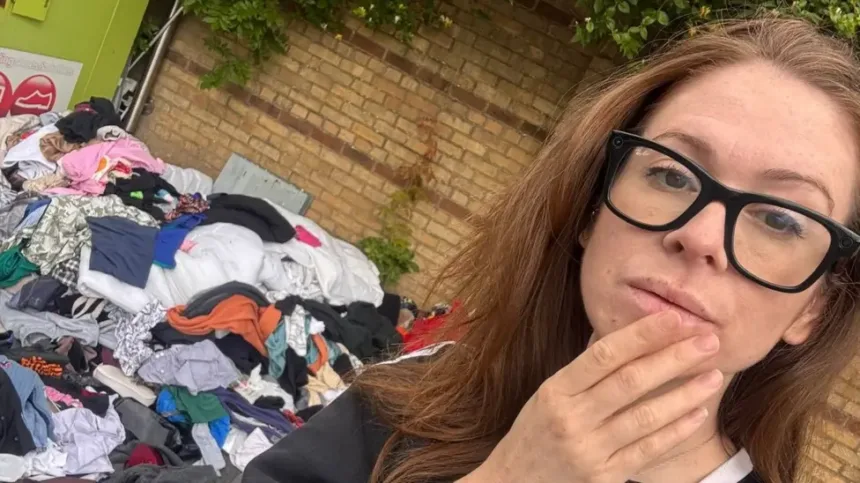
A north London mother says goods dumped beside recycling bins outside her local supermarket have clothed her children for years to come and saved her hundreds of pounds in six months. She is one of a growing number of dumpster divers who now openly share their finds online.
Darryl Baker, 39, a freelance journalist, asked supermarket staff whether she could take some of the discarded items. Once they agreed, she pulled out clothing from brands including Ralph Lauren, Nike and The North Face, along with an Ikea picture frame and children's scooters.
She keeps some pieces for herself and passes others to her nephews and nieces. The rest she donates or sells, including a men's Barbour jacket that recently brought in £30.
Divers cite several reasons for climbing into commercial bins: saving money, supplying charities and anger at how many usable items are thrown away. Many combine all three.
Five decades in the trash
In Fort Worth, Texas, Jeff Ferrell has scavenged trash for more than 50 years and still goes out every day by bicycle. The 72-year-old, a professor emeritus of sociology at Texas Christian University, has written books on the subject.
Ferrell describes his approach as part Robin Hood, part anarchist direct action. He scrounges only in wealthier neighborhoods, gives away many finds and says he never buys soap, toiletries, medical supplies, shoes, clothes, tools or garden supplies.
Almost everything in our home is scrounged, and I never buy, for example, soap or toiletries or medical supplies, or shoes and clothes and tools and garden supplies
Jeff Ferrell, professor emeritus of sociology at Texas Christian University
He sells discarded metal to a scrapyard for about $150 every two weeks, while his wife sells antiques and jewellery he finds on eBay. Counting savings and sales, he puts the value of his finds at tens of thousands of dollars a year.
Refashioned dresses and free toiletries
London stylist Millie Diamond, 36, posts videos on Instagram of herself searching bins for fabrics and clothing to rework into new items, some of which she sells. She started after spotting fabrics thrown out by a business that had closed and found a bin full of vintage clothes; she values one salvaged dress at £600.
In Essex, sales assistant Charlotte Bayford, 44, times her searches for when Essex University students leave for the summer and abandon belongings, including half-used toiletries. She says she has not bought shampoo in eight years and will eat sealed food, such as tins of Heinz baked beans.
Where the law draws lines
Legality varies. Ferrell says many U.S. cities, including New York, Cleveland and Wichita, ban the practice because discarded items become the property of the city or the private trash company, and divers can also face trespass charges.
In Fort Worth, he says, items may be taken from bins only when they sit on public land.
But there is no general rule that something is free to take simply because it has been put in a skip or bin.
Sunjay Versani, Duncan Lewis Solicitors
In the U.K., Sunjay Versani of Duncan Lewis Solicitors says the answer depends on circumstances. Prosecution is unlikely in many cases involving truly discarded goods, he says, but he advises asking the owner or business for permission when unsure.