
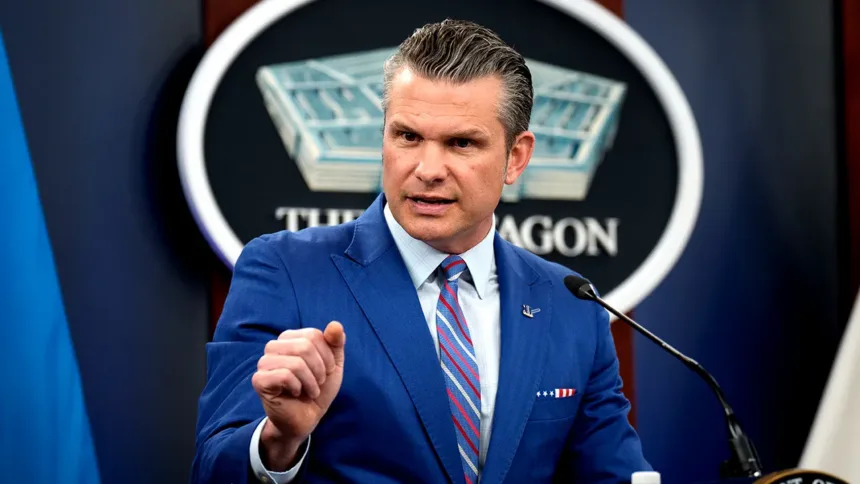
Secretary of War Pete Hegseth has ordered the Pentagon's entire intelligence apparatus to make foreign threats to Tuesday's midterm elections a priority, labeling election security a mission that cannot fail.
The September directive reaches well past U.S. Cyber Command and the National Security Agency. It covers the whole Defense Intelligence Enterprise and is addressed to the directors of the Defense Intelligence Agency and the National Geospatial-Intelligence Agency as well.
Under the order, military intelligence agencies are to gather and analyze intelligence on foreign election threats. Cyber Command is told to counter potential foreign cyber activity using the authorities and tools it already has, working alongside the Department of Homeland Security. The directive does not publicly create new authorities or a new election-security body.
How much the order has changed existing operations is unclear. The Department of War declined to describe how it is being carried out, Cyber Command turned down an interview request, and the Pentagon has not said whether it led to more staff, money or organizational changes before Election Day.
In practice, the work can involve spotting foreign hackers or influence campaigns abroad, alerting civilian agencies to threats aimed at U.S. targets and, with authorization, letting Cyber Command strike at the foreign actors or infrastructure involved. The military's job largely ends at the border, since state and local officials run elections and the FBI and Homeland Security handle domestic threats.
A mission years in the making
The Pentagon has done this work for years. Ahead of the 2018 midterms, Cyber Command and the NSA set up a Russia Small Group focused on foreign interference, which later grew into a joint Election Security Group pairing NSA intelligence collection with Cyber Command operations.
By 2022, Gen. Paul Nakasone, who then led both Cyber Command and the NSA, was calling election security an enduring no-fail mission, the same framing Hegseth now uses. The agencies formed an Election Security Group again for the 2024 presidential race, but whether one exists this year has not been made clear.
Rest assured, we were doing operations well before the midterms began, and we were doing operations likely on the day of the midterms,
Gen. Paul Nakasone, former head of Cyber Command and the NSA
Gen. Joshua Rudd, who now heads Cyber Command and the NSA, told lawmakers in April that foreign interference was reasonable to expect given past experience and that his command stood ready to help. He said then that he did not know whether the Election Security Group had been reconvened.
No sign of tampering so far
U.S. intelligence officials say they have found no evidence that any foreign adversary has tried to tamper with voting machines, physical election infrastructure or vote counting before Tuesday. Rep. Jim Himes of Connecticut, the top Democrat on the House Intelligence Committee, said last week that nothing has contradicted that finding, but he urged Americans to stay alert for foreign disinformation, which he said artificial intelligence makes easier to spread.
Officials are still watching influence operations from Russia, China and Iran. Members of Congress who received a classified briefing last month said Moscow's disinformation has gone after candidates and public faith in the vote, while Beijing has concentrated on candidates it regards as hostile.