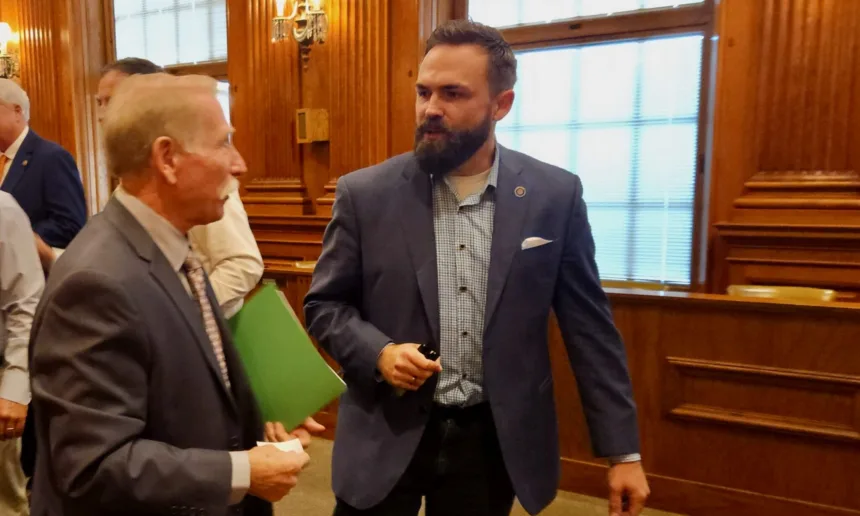
Missouri Senate Republicans on Thursday picked Sen. Jason Bean of Holcomb as president pro tem and Sen. Nick Schroer of St. Charles County as majority floor leader. The two will steer a smaller caucus after Tuesday's election stripped the party of its two-thirds supermajority.
Democrats flipped two Senate seats, one in eastern Jackson County and one in Springfield. When lawmakers return to Jefferson City in January, Republicans will control 22 of the 34 seats.
The setback reached the House as well, where Democrats picked up 16 seats and broke the GOP supermajority in that chamber.
Clashing reads on the losses
Senate Democrats chose Sen. Stephen Webber of Columbia as their minority floor leader on the same day.
The new Republican leaders do not share a diagnosis. Schroer said his party lost because it failed to follow through on its promises, not because its agenda leaned too far right. He dismissed calls to shift toward the center, pointing out that moderate Republicans were also defeated.
Voters are sick and tired of spineless politicians that promise the world and produce nothing
Nick Schroer, incoming Missouri Senate majority floor leader
Schroer wants Republicans to concentrate on tax cuts, education reform, public safety and the cost of living.
Bean said the results showed the party has to rethink its approach, but he would not side with either the bolder or the more moderate camp. He wants to study what voters supported and rejected first. Senate Republicans plan to meet in Kansas City next week to set priorities.
New limits on the agenda
Webber argued that a national backlash alone does not explain the outcome. He cited the lopsided August defeat of GOP-backed plans to overhaul the state tax system and make constitutional amendments harder to pass. On Tuesday, voters also turned down a proposed abortion ban and a Republican congressional map.
It was a national dumpster fire that Missouri Republicans poured gas on
Stephen Webber, Missouri Senate minority floor leader
Voters also approved Amendment 6, which curbs the Legislature's ability to change citizen-approved measures and bars lawmakers from weakening the initiative petition process. Any legislative attempt to alter a voter-approved initiative now needs 80% support in both chambers, followed by another statewide vote.
A chamber of newcomers
Schroer said Republicans still plan to pursue changes to the petition process and new abortion restrictions. He acknowledged that the amendment could get in the way, adding that attorneys are reviewing its legal effects and whether to challenge it in court.
Nearly half of next year's senators will be new to the chamber. Bean said his first task is building personal ties through dinners and other informal gatherings. He also wants first-term members to take turns presiding so they learn the chamber's procedural rules.
Schroer will decide which bills reach the floor, and he promised a no-nonsense negotiating style. He said years of what he considers excessive spending have left fiscal problems that will require a budget with support from both parties. He named video lottery terminal legislation as another issue that will need cross-party talks.
Sen.-elect Keri Ingle, a Lee's Summit Democrat who unseated Republican House Speaker Jon Patterson, also ranked the budget near the top of her list. In her view, though, Republican fiscal choices have put public schools and Medicaid at risk. She plans to push recommendations from Gov. Mike Kehoe's task force on the state's troubled child protection system.
Webber said he is hopeful about working with the new Republican leaders if they focus on affordability and public schools. He described the wave of new senators as a chance to reset a chamber marked by years of bitter partisan and intraparty fights.